 Is the glass half-full or half-empty?
That’s the essence of what atheist blogger Staks Rosch is getting at when he wrote a piece for the Huffington Post called “Dear Pope, Atheists don’t need redemption”.
Here’s a key excerpt:
I don’t believe humans are evil sinners in need of redemption. I don’t see the glass as half empty. I think people are more nuanced than that. We do good things and we do bad things.
First of all, let me write that I would dearly LOVE to agree with Staks. In fact, for many years I was onside with his main points. And it’s hardly a stretch to say that yes, we do good things and bad things.
So what happened?
Simply put, I came to ask these questions: what do we do about the bad things we do? And what do we do about the good things that we FAIL to do?
I’m not talking about destroying skyscrapers or failing to stop genocide – for most of us, such “sins” are as relevant as contemplating life on Mars. I’m talking about when I’m blatently insensitive to my wife or find an excuse not to help a friend in need because it makes me uncomfortable.
What does Staks Rosch do about these things? Apparently, nothing except writing that “I have come to understand that people generally try to be the best they can.”
And to that point, I have to sadly disagree.
In well-off North America it’s easy to be distracted by shiny things (oooh, a new iPad! And look what dumb thing that politician/movie star did today!). But if you and I pay attention to what’s really happening in this world, we would have to admit that people generally DON’T try to be the best they can. I can think of no other explanation for:
- Thousands of child soldiers in Africa;
- Rampant sex slavery in southeast Asia (supported by western ‘sex tourists’);
- Massive corruption in developing nations (aided by North American companies like engineering giant SNC Lavelin);
- Cash-strapped western governments cutting social services, but propping up banks.
When I think about these things, I have no trouble believing this quote from one of the earliest and most influential followers of Jesus of Nazareth (who many people believe is the Son of God): “All have sinned and are not good enough to share God’s divine greatness.”
Staks Rosch doesn’t face this truth in his blog. But lots of people do face it. And some of them, like me, decide to follow Jesus because we need REAL, PERMANENT good news.
The good news is by believing that Jesus sacrificed his life to wipe out the bad things we’ve done and the good things we’ve failed to do, we also welcome Him to change us. To make us more like Him.
And, if you believe life goes beyond 70 or so years on this planet, then that good news is permanent. When I’m done with this life, I’ll face God’s judgement. And I’ll come through that judgement scott-free because of what Jesus did for me.
He can do it for you, too. So, what do you think? Post your thoughts below and let’s have a conversation.
Posted in Me & The World | Tagged atheism, Bible, Christianity, Faith, Frank King, Frank's Cottage, glass half-empty, glass half-full, God, half-empty glass, half-full glass, Huffington Post, Jesus, religion, Romans 3:23, sin, SNC Lavelin, spirituality, Staks Rosch, theology | 6 Comments »
 It happened a number of years ago but, even now, I think “what a world we live in”.
In 2010 I read, in open-mouthed astonishment, a newspaper article about a Toronto woman suing Rogers because, she claims, the Canadian internet/cable TV/telephone/mass media conglomerate’s billing practices ruined her marriage.
Gabriela Nagy launched a $600,000 lawsuit against Rogers Communications for invasion of privacy, breach of confidence, breach of privacy and negligence.
She claimed the company was wrong to bundle her cellphone bill with her husband’s Internet and home phone services. The resulting invoice, addressed to her husband, contained details of her outgoing cell phone calls – details which, Ms. Nagy said, her husband used to figure out she was having an affair. He took their children and left her in 2007.
A Rogers spokesperson, while denying it breached her privacy, said Ms. Nagy and her husband asked to have all their services consolidated into one bill.
First of all, I have to admire Ms. Nagy’s chutzpah, to brazenly sue a company for exposing her infidelity. Never mind that it would have made more sense to spend her time and energy fixing her marriage or, if her husband was not willing, to seek professional help and get to the bottom of her lack of commitment.
When I finished reading the article, I recalled other media reports about a website called AshleyMadison.com. Using the slogan “Life is short. Have an affair”, the site claims that, for a fee, it will guarantee you a, um, successful affair.
So it appears our culture is moving toward approving adultery – even as it exercises a double standard by punishing celebrities and “heroes” like Tiger Woods when they fall on their faces.
Is marriage easy? Occasionally but, after health issues, it’s often the biggest challenge in our lives. And yet, I’ve read of studies that show single people don’t live as long and are often more lonely than married couples.
Then I remember something I read in the Bible called ‘1 Corinthians’: “No test or temptation that comes your way is beyond the course of what others have had to face. All you need to remember is that God will never let you down; He’ll never let you be pushed past your limit; He’ll always be there to help you come through it.”
Does that mean some sort of supernatural fix for a troubled marriage? Maybe, but much more often, I’ve seen how it’s translated into unexpected help from a distant cousin, a surprisingly supportive chat with your financial advisor, an out-of-the-blue offer from your boss for a few days off, or a quiet promise from a “religious” neighbor to pray for you.
All these things could very well happen to Ms. Nagy. Or to you. And you may not even realize it until later. That’s just how God likes to work. We’re part of His plan. In fact, we are His entire plan – even when we treat marriage and commitment like a burden or joke.
What do you think? Post your thoughts below and let’s have a conversation.
Posted in In The News | Tagged 1 Corinthians 10:13, Ashley Madison, AshleyMadison.com, Bible, Christianity, commitment, Faith, Frank King, Frank's Cottage, God, infidelity, marriage, marriage and commitment, marriage break-ups, Rogers, Rogers Communications, spirituality | 4 Comments »
 “Why can’t you just be good?”
That was the question a frustrated relative posed during a faith discussion at a social event. The question was aimed at me because I was the only person at the event who followed Jesus of Nazareth (who many people believe is the Son of God) and the topic was getting to Heaven.
Just be good and you’ll be welcomed inside the pearly gates, right? As far as I can tell, that’s the point of view held by most people in our culture.
So why isn’t it true? Well, consider this: the residents of Walkerton, Ontario — a small town in central Canada — thought their water supply was good. You could pour a glass, hold it up to the light and it looked perfectly fine to drink.
But it wasn’t. In 2000, many residents began to experience bloody diarrhea and infections. Local officials insisted the water was drinkable, until the skyrocketing number of contamination cases caused the region’s medical officer of health to issue a “boil water advisory”.
It turns out the water was infected with deadly E.coli bacteria and by the time the crisis ended, 2,500 people (half the town’s population) became ill and seven died.
This may seem like an extreme case to you, but trust me, there isn’t a particle of water on this planet that is absolutely pure. No matter how clear and clean it appears.
And that’s the case with human beings. No matter how good some of us seem to be, no matter how generous, no matter how well-adjusted, every one of us has defects.
Looking for evidence? Consider this excerpt from a letter written by one of the ancient Jesus followers: “All have sinned and are not good enough to share God’s divine greatness.” Sadly, nothing has changed since those words were written about 2,000 years ago and that’s why you can’t “just be good” and get into Heaven.
But there is a solution. Most Jesus followers believe what the ancient prophets wrote and they claimed God did something about our inability to become truly good. He gave us the gift of Jesus.
Here’s what Jesus did:
- He lived with us;
- He taught us who God is and how we can welcome Him into our lives;
- He allowed government authorities to put him to death, so that ALL the wrongs committed by anyone who believes in Him and follows Him would be paid for and wiped out of existence;
- He came back to life to defeat the power of death, prove He is the Son of God and provide a way for all humanity to live with Him forever in Heaven.
I see this as incredibly good news. How about you? Post your thoughts below and let’s have a conversation.
Posted in Me & The World | Tagged be good and get to Heaven, Bible, Christianity, clean water, Faith, Frank King, Frank's Cottage, God, good enough for Heaven, Jesus, Problem with good, religion, Romans 3:23, spirituality, theology, Walkerton | 10 Comments »
 “Candidly, we go after the cool kids. We go after the attractive all-American kid with a great attitude and a lot of friends. A lot of people don’t belong [in our clothes], and they can’t belong. Are we exclusionary? Absolutely.”
These were the words of Mike Jeffries, the chief executive officer of trendy clothing retailer Abercrombie & Fitch, spoken in a 2013 interview with Salon, the online news and entertainment website.
That this was the policy of his company is not surprising; lots of retailers aim their products at a specific demographic (rarely mine, I can tell you) and ignore all others.
But none have been so bold – or brave – to publicly state that they don’t want overweight, older or ‘unattractive’ people anywhere near their products.
I was fascinated by the resulting controversy; many people, media outlets and websites reacted almost violently to Jefferies. Some online posters even searched out and shared the most unflattering photos of the CEO that they could find.
But isn’t it clear that Abercrombie & Fitch’s philosophy is exactly how our world works? Haven’t you seen or heard advertisements for condominiums that emphasize how exclusive they are? And aren’t certain restaurants trendy because they are exclusive? What about golf and country clubs – don’t they attract a certain kind of person who likes their exclusivity?
More important, aren’t there times in our lives when most of us – me included – have yearned for a meal in that exclusive eatery or lusted after a unit in that trendy housing project? We actually want to exclude others.
In some ways, I appreciate Mike Jeffries thrusting this unpleasant human characteristic into the spotlight. It gives me a chance to examine my own thinking patterns. It also highlights one big reason why I hold fast to my faith in Jesus of Nazareth, who many people believe is God’s Son.
You may have been told, or come to believe, that following Jesus is exclusionary – that only people in the club get to spend eternity in Heaven with God and Jesus.
Serious Jesus followers do believe that because in one of the original source documents of His life, Jesus says “I am the way, the truth, and the life. The only way to the Father is through me.”
But what the critics of Jesus don’t tell you is anyone – and I mean ANYONE – can join Jesus in Heaven. God presents His son as a GIFT to every man, woman and child on planet Earth. Gifts are made to be accepted and that’s all you and me have to do to get in on this so-called “exclusive” offer.
When you tell God you want to trust in His son (who many people believe died to make up for all the wrong things we’ve done and the right things we’ve failed to do), the slate is wiped clean. No matter how ugly your past might be.
How inclusive is this gift? It’s open to Mike Jefferies, it’s open to me, it’s open to YOU, it’s even open to the most reprehensible kind of person (read one such story here: http://wp.me/p2wzRb-6K).
So what do you think of this gift? Post your thoughts below and let’s have a conversation.
Posted in In The News | Tagged Abercrombie & Fitch, Bible, Christianity, Faith, Frank King, Frank's Cottage, God, Jesus, John 14:6, Mike Jeffries, religion, spirituality, theology | 12 Comments »
 Does being born and raised into your “religious” faith make you a deluded person? Absolutely, according to atheist John Loftus. His fascinating essay is called “The Top Ten Marks of a Deluded Person” and I’m happy to engage John on all his points.
1. John says being born and raised into a faith makes you delusional for this reason: “Just taking the odds at face value, this is non-controversial and undeniable given the number of religions propagated around the globe and adhered to with utter and complete confidence as the one true faith.”
Do you understand that? Me neither. And I’ve read a lot of “religious” books and engaged in many debates with atheists. Maybe someone can explain it for me.
2. As an adult, never adopts nor cultivates the adult attitude of doubt. John says “All adults must revisit the religious faith taught to them by their parents,” and I absolutely agree.
God agrees, too. In a letter written by one of the earliest followers of Jesus of Nazareth, Jesus followers are encouraged to “work out your salvation with fear and trembling”. Did you know that, John?
3. Never reads widely or is exposed to other points of view in the media.
We agree on this one, too. I’m always saddened when I encounter Jesus followers who know nothing about other faiths or about the burning issues of the day. It’s embarrassing.
4. Does not travel widely, including travel into different cultures.
Not so fast, John. Maybe you have the resources to wander all over this glorious planet. But many, many people (some of them atheists), don’t. So that hardly makes anybody deluded.
5. Never studies deeply into the nature of his or her adopted faith.
Yes! I’m also embarrassed when I chat with fellow Jesus followers and get a blank stare when I mention a well-known Jesus follower or event in history. So now I can ask you, John: have you studied deeply into the nature of your atheistic faith?
6. Lies in order to defend one’s faith. “If you have to lie to defend your faith, then you need help,” John writes.
And I nod my head in vigorous agreement.
7. Preaches to people who think differently, rather than rationally engaging them.
Once again, John and I see the same way. That’s why Frank’s Cottage is focused on starting conversations with readers. I end every essay with that invitation.
8. Claims he or she does not need evidence to believe.
Ya, that’s a silly claim. Do I have all the evidence I want? Nope. If I did, it wouldn’t be called “faith”. But do I have enough? Absolutely. Just as I imagine John has enough to believe in his faith.
9. Must be convinced that his or her faith is impossible before seeing it as improbable.
John seems to think that if he can show that someone’s faith is improbable, that should be enough. OK, John. What if someone demonstrated that atheism is an improbable faith. Would you be willing to change your mind?
10. Must denigrate the sciences in order to have faith. “Faith demands it,” John added.
I disagree. As far as I’m concerned, science shows us more about God. And I’ve written about just a few of the Jesus followers currently starring in the science world here: http://wp.me/p2wzRb-3o.
So, am I deluded because I follow Jesus? Or are you surprised at how often John and I agreed? Post your thoughts below and let’s have a conversation.
Posted in Me & The World | Tagged atheism, Bible, Christianity, Deluded Christians, Faith, Frank King, Frank's Cottage, God, Jesus, John Loftus, religion, spirituality, theology | 10 Comments »
April 27, 2013 by Frank King Photos
 I’ve been reading a blog by a guy named Derrick Miller, who wrote about his trip in and out of Christianity and, finally, to atheism.
It’s pretty interesting reading, and Derrick makes some good points about some of the challenges of being a Christian. Among them, he notes:
• The difficulty of reading and comprehending some parts of the Bible;
• The challenge of living the kind of life he thought would be pleasing to God;
• Coming to some sort of conclusion about the purpose of the universe; and
• Understanding why there are so many Christian denominations (more than 50 in Canada alone).
Can I address these difficulties in a credible way? Some of them, perhaps, but not all. I don’t believe many people can, simply because they are huge topics requiring an incredibly wide range of knowledge.
But there’s something larger here to address. Something that Derrick’s blog made very clear: he didn’t understand that Christianity isn’t primarily about comprehending all the Bible or the universe. It isn’t primarily about pleasing God by trying to emulate Mother Theresa or Billy Graham. And it’s certainly not about grasping all the viewpoints held by Christian churches.
In the end, the things that tripped up Derrick are merely colorful, shiny billboards on the road of life. Spend too much time staring at them and, like Derrick, you’ll drive off the road and land in a ditch.
Ultimately, Christianity is about a relationship between you and Jesus, who many people believe is the son of God. Plain and simple? Yes, but it’s very radical and utterly opposite to doing stuff and understanding stuff and reading stuff and getting our act together and, and, and…
I suspect if Derrick had encountered someone who could have explained this relationship and lived it out in front of him – a mentor or a Jesus-following friend or an interested pastor, for example – then his life would have been very different.
A mentor could have guided Derrick to resources that would provide a new and relevant understanding of the Bible.
A pastor could have shown Derrick that while it’s great to get his act together, he (a) could never be “good enough” for God – and didn’t have to, thanks to Jesus’ death and resurrection – and, (b) he didn’t have to even try on his own.
A Jesus-following friend could have made it plain to Derrick that there have always been, and always will be, unanswerable questions. Those questions are the evidence we egotistical humans need to remind us that God is God and we are NOT.
Are the things that put Derrick’s “car” into the “ditch” the same things that are keeping you from even sliding behind the wheel and turning the ignition key? Respond below and let’s have a conversation.
Posted in It's Not About 'Religion' | Tagged atheism, Bible, Christianity, church, Derrick Miller, Faith, Frank King, Frank's Cottage, God, Jesus, Jesus relationship, religion, spirituality, theology | 12 Comments »
April 20, 2013 by Frank King Photos
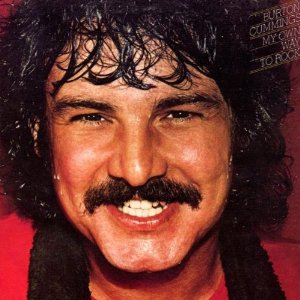
 He visited a church. It left him so “scared” that he wrote one of his best-known songs about the experience. But what happened – or didn’t happen – after?
I’m referring to Burton Cummings, the pride of Winnipeg, Manitoba, leader of the Guess Who, one of Canada’s best known classic rock bands and a well-known solo singer/songwriter/pianist.
During the 1970s, Cummings was in New York City and visited St. Thomas Church. His time inside that glorious cathedral was so moving, he wrote ‘I’m Scared’, a song on his first solo CD that he still performs today.
Stopped by to see St. Thomas, on a cold and dreary New York afternoon
Something in the air was oh so rare
I don’t know what it was but I know that it’s still right there
and I’m scared.
As Cummings said years later, during a reverential 2011 YouTube video tour of the church, “There was a presence, definitely a presence”.
In fact, the lyrics to ‘I’m Scared’ say this:
Never been much on religion, but I sure enough would like to hear the call.
Come on now, give me a sign you’re listening to me
You hear me talking, you hear me crying, it’s confusing to me Lord, I’m terrified.
So as far as I can tell, God DID give him a sign He was listening. He knew about Cummings’ spiritual emptiness, brought him to St. Thomas Church and touched his soul in a way he’d probably never before experienced.
And yet, every other recording, TV or radio interview, video (including one on his latest studio CD, Above The Ground, which is laced with F-bombs) and all the blogs on his website make it clear that Cummings didn’t respond to God. God gave him a sign and Cummings turned his eyes away.
Certainly, that’s the easiest thing to do in our culture, which seems to regard most spirituality with suspicion and followers of Jesus of Nazareth with outright contempt. But in doing the easy thing, Cummings is still left with a spiritual hole – just read between the lines of his blog entries and you can see it for yourself.
For many years, I did the same thing as Cummings. Through my experiences and encounters with people who followed Jesus, God reached out to me and invited me to connect with Him through His Son.
It had almost nothing to do with “religion”, but everything to do with a life-long, life-enhancing relationship that would continue after my time on this planet is done. And until 2002, I ignored it.
Has this ever happened to you? Do you recall an experience laced with a presence you can only call “God”? If yes, why not revisit it? Then post a comment below (or, if you want more privacy, email me at fdking@hotmail.com) and let’s have a conversation.
Posted in Me & The World | Tagged Burton Cummings, Christianity, Faith, Frank King, Frank's Cottage, God, Jesus, religion, spirituality | 7 Comments »
April 13, 2013 by Frank King Photos
 If you’re over 40, you might get a chill as I resurrect a shadowy name from the 1970s: Son of Sam.
This was the nickname David Berkowitz gave himself as he terrorized New York City, killing six people and wounding seven in 1976-77. In prison since then, he claimed during his trial that he was under the influence of a demon who possessed his neighbour’s dog.
Berkowitz was in the news not too long ago, responding to a 2011 Fox News reporter’s inquiry to reveal he would no longer seek parole because his faith has already made him free.
“I am not saying this jokingly,” he wrote. “Jesus Christ [who many people believe is the Son of God] has already forgiven and pardoned me, and I believe this. He has given me a whole new life, which I do not deserve. I am forever grateful for such forgiveness.”
Before you begin protesting, Berkowitz has expressed remorse for his crimes, dating back to 2007 when he issued an apology on his website. He expressed remorse again in his Fox News letter, writing “I have deep regret and sorrow over my past criminal actions.”
But that’s not the point of this essay. The point is more controversial. Has the Son of Sam been forgiven by Jesus? Has he been given “a whole new life”?
The answer, if Berkowitz is sincere, is YES. If he came to believe that Jesus died to pay for his crimes, and as a result asked for the forgiveness Jesus made available to every person on this planet, then YES. If he’s committed himself to following Jesus, then YES.
Isn’t this outrageous? That’s the scandal of God’s grace (unmerited favour) through Jesus. It isn’t just available to you and I for those times we exceeded the speed limit or lied to our supervisors or paid for some service under the table. It’s available for everything. For everyone, including the Son of Sam.
Our culture may not consider this a good thing. But it is. In fact, I regard this grace as one of the things that most separates following Jesus from other faiths. And it is based on a complete lack of what some cultures call a “caste” system that ranks people’s value.
When Paul, one of the earliest Jesus followers, wrote in a letter that “all of us have sinned and fallen short of God’s glory,” he didn’t include a footnote that singled out some people or groups as having sinned more (or less). That statement is the great equalizer for all humanity. See? No caste system.
So, if you’re carrying around something that pesters you like a persistent backache, do what David Berkowitz has done: place your trust in Jesus, ask for forgiveness with complete sincerity, then receive it. And believe it, because that forgiveness is as real and enduring as death, taxes, and annoying reality TV shows.
Even if you’re not burdened with guilt, give some consideration to this faith that goes beyond our wavering ability to forgive. It provides permanent grace, an extraordinary gift to a broken world.
What do you think? Post your thoughts below and let’s have a conversation.
Posted in In The News | Tagged Bible, Christianity, Christianity blog, David Berkowitz, Faith, forgiveness, Frank King, Frank King blog, Frank King Christianity blog, Frank King religion blog, Frank King spirituality blog, Frank's Cottage, God, Jesus, Jesus blog, religion, religion blog, Son of Sam, spirituality, spirituality blog, theology | 15 Comments »
April 6, 2013 by Frank King Photos
“People go to church for the same reasons they go to a tavern: to stupefy themselves, to forget their misery, to imagine themselves, for a few minutes anyway, free and happy.”
Mikhail Bakunin (1814-1876)
 Wow; how’s THAT for a shot across the bow of anyone with a faith life? I stumbled upon this provocative quote on the internet the other day and it definitely caused my mental wheels to spin.
While I’m sure some of you agree with this Russian philosopher and revolutionary (he was a contemporary of communism co-founder Karl Marx), how about taking a moment to be open-minded and read something from the “other side”?
Going to church is like going to a tavern? Well, there are similarities. Both are social activities, since they include interacting with others in a confined space.
Forgetting our miseries? Yes, there’s some commonality there, too. Just as there is between attending church and going to a rock concert or a play or a movie. For those hours, we leave our lives at the door and enter into a new experience.
“Imagining” myself free and happy? Bakunin, who never saw a revolution that he didn’t like or try to encourage (no matter how pointless or violent), might dismiss church like this, but he certainly didn’t have all the answers to life. No one does.
But I will say this: I AM free and happier as a church-going man.
I am free from the guilt associated with all the bad things I’ve done and all the good things I’ve failed to do, because of the death of Jesus of Nazaareth (who many people believe is the Son of God).
His sacrificial death, for anyone who believes in Him and follows Him, means my “sins” have been wiped from the books. Want evidence? Then consider these words from an ancient Jesus follower’: “Jesus is the way our sins are taken away. And he is the way all people can have their sins taken away, too.”
Knowing what Jesus has done for me (and for you too, if you want it) makes me happier. It also makes me want to invite Him into my life so I can become more of the person He knows I can be.
The way Bakunin saw it, going to a tavern and going to church are equally useless. But attending church has transformed many lives for the better — and for eternity. Can you credibly make the same case for any tavern, pub or bar? Post your response and let’s have a conversation.
Posted in Me & The World | Tagged 1 John 2:2, Bible, Christianity, church, Faith, Frank King, Frank's Cottage, God, Jesus, Mikhail Bakunin, religion, spirituality, theology | 16 Comments »
March 30, 2013 by Frank King Photos
 I’ve never heard a note by the Grammy Award-winning British band Mumford & Sons, but an interview leader Marcus Mumford did a few years ago with Rolling Stone magazine caught my attention.
Lyrics on the band’s recordings have many references to God, prayer and struggles with faith. But Mumford told Rolling Stone he doesn’t like the word ‘Christian’.
“It comes with so much baggage, so no, I wouldn’t call myself a Christian. I’ve kind-of separated myself from the culture of Christianity.”
I get where Mumford is coming from. Mention the word Christian to the average person – maybe even you – and the first thing (heck, often the ONLY thing) that comes to mind are words like “judgmental,” “negative” and “ignorant”.
You might also think of the sexual abuse scandals in the Roman Catholic Church, the hate-filled protests of a certain tiny U.S. congregation (it’s not worth naming) or bizarre statements by a few televangelists.
The media loves highlighting this stuff. And that means the life-giving good news of Jesus of Nazareth (who many people believe is the Son of God) is harder to find than a government surplus.
But, as one of the ancient writers passed on to us, “When you get serious about finding Me [God] and want it more than anything else, I’ll make sure you won’t be disappointed.”
What does this mean? It means doing something our culture stridently opposes: asking questions like:
- Why am I – and the rest of humanity – here?
- Is there more to life than 70+ years of toil, taxes and failing health?
- Am I snuffed out of existence after my last breath, or is there something else?
Maybe you’re brave enough to ponder these BIG issues. And if that’s the case, then consider these answers:
1. “If you want to know why you were placed on this planet, you must begin with God,” wrote Rick Warren in his bestseller The Purpose Driven Life. “You were born by His purpose and for His purpose.”
2. “Those who trust in their wealth are headed for great disappointment, but those who do right will sprout like green leaves in the spring.” That’s from an ancient and very influential writer. And it means you can escape the drudgery of life when you leave behind the “he who has the most toys when he dies wins” attitude encouraged by our culture.
3. There IS something more after this life ends. The question is, what do YOU want it to be? One of Jesus’s earliest followers wrote: “If you openly say, “Jesus is Lord” and believe in your heart that God raised him from death, you will be saved.”
Saved from what? From judgment. When you become a follower of Jesus, God no longer sees all the bad things you’ve done and the good things you’ve failed to do. He sees you like he sees Jesus: perfect, without a single blemish.
Does this makes sense? Yes or no, post your thoughts below and let’s have a conversation.
Posted in In The News | Tagged Bible, Christianity, Faith, Frank King, Frank King blog, Frank King Christianity blog, Frank King faith blog, Frank King religion blog, Frank King spirituality blog, Frank's Cottage, God, Jeremiah 29:13, Jesus, Marcus Mumford, Mumford & Sons, Mumford and Sons, Proverbs 11:28, religion, Rick Warren, Rolling Stone, Rolling Stone magazine, Romans 10:9, spirituality, The Purpose Driven Life, theology | 16 Comments »
« Newer Posts - Older Posts »
 Is the glass half-full or half-empty?