Feeds:
Posts
Comments

Posts Tagged ‘Christianity’

homer-simpson-quotes-about-love-7417I found this graphic on the Internet and, as a fan of the long-running Simpsons TV show, it got my mental wheels spinning.

First, the fun stuff. Homer Simpson the hard worker?? If you’ve seen the Simpsons, you’ll know Homer works hard looking for ways NOT to work at all. 🙂

“Not a bad guy”. Maybe not. But a good guy? Well, who among us is really good?

Consider these words from one of the earliest and most important followers of Jesus of Nazareth: “There is no one doing what is right, not even one.”

Beyond that challenging statement, I ask: what is “good”? Am I still good if I routinely exceed the speed limit (which I do)? Am I still good if I pay a contractor under the table to avoid taxes (which I don’t)?

And what about ignoring my creator? As a serious follower of Jesus (who many people believe is the Son of God), I know that God is interested in every part of my life. So if I live as if He barely exists, am I still “good”?

One of the reasons I follow Jesus is because in the end, I have to admit I’m NOT good. And no matter how hard I work at it, I can never be good on my own.

I welcome Jesus into my life because He is bringing me closer to “good”. And for the many times I still fall short, his sacrificial death and resurrection wipes all my shortcomings off the books. God sees me as he sees His Son – perfect, without blemish.

The other thing that grabbed me about this graphic is the notion of spending Sundays (in church, I presume) hearing about going to Hell.

I imagine if you’re not a regular church attender, then you’re nodding in agreement with Homer’s assertion. But it’s no more true than his claim about working hard.

I regularly attend church services because through them, I learn more about how to live as a Jesus follower. I’m also surrounded by other Jesus followers who encourage me, support me and pray with & for me.

Does Hell come up? Now and then. However, serious Jesus followers aren’t fixated on it because we know we’re not going there. But we keep in mind all those we know who don’t follow Jesus. We want to spend eternity with them in Heaven, so we pray for them and, at church, we learn how to lovingly show them and tell them about the hope we have in Jesus.

If that sounds appealing to you, then step out on the ledge one Sunday. Go to a church service and talk to the people you meet there. It just might change your life. 🙂

Read Full Post »

ChurchBeyond being a proud stepdad to three wonderful young adults, parenthood – the 24/7, down-and-dirty real thing – is not and will not be part of my life. But I know for certain one thing my parents did right for me: they took me to church.

Despite moving several times, my parents continually had me and my two brothers attend Catholic mass with them until I hit age 16. For the most part, I found the experience a stand-up/sit-down/recite-this-standard-prayer exercise in boredom.

What probably didn’t help is that the experience didn’t seem much more interesting to my parents. The meaning and significance of a Catholic mass was never explained to me (I’m not sure Mom and Dad understood it, either), so when they told us we were old enough to decide for ourselves whether we wanted to keep attending, the result was no surprise. All of us brothers said “no thanks” and for me, that was the end of church for many years.

But the seed of something deep and spiritual was planted and, I’m glad to write, has blossomed into such significance that it influenced who I married and where I go to work.

So, I remain grateful for what Mom and Dad did all those decades ago, especially when I read a National Post blog by Barbara Kay on the subject of children and faith. One paragraph, in particular, stood out:

Children are not satisfied with chaos theory or moral relativism. They want order, a system, a precise identity (my friend’s grandchild told a schoolmate he was ‘half Jewish, half Christmas’). They need an infallible ‘GPS’ to navigate their way through ‘mean’ playmates, unfair or insensitive teaching, the troubling deaths of pets and family members, rumours of war and natural disasters.”

So, imagine if I hadn’t had a childhood GPS? And just as important for young parents, imagine if your children don’t have a GPS? That’s why I write that even if you’re not quite sure where you stand with Christianity, even if you still have a ton of unanswered questions, even if some things make you scratch your head in confusion, set them aside and take your children to church.

If they aren’t regularly exposed to Sunday services, they will likely miss the chance to decide for themselves about a life of faith, about who Jesus is, and about the value of following Him. You will have made the decision for them, on a matter I believe is of supreme importance.

As Ms. Kay put it in her blog, “There is nothing to be lost in gifting children with God and religion, but much to be gained – for them as individuals and for society as a whole.”

Agree? Disagree? Put your thoughts in a comment below and let’s have a conversation.

Read Full Post »

vonnegut“Being a Humanist means trying to behave decently without expectation of rewards or punishment after you are dead.” – Kurt Vonnegut (1922-2007)

I guess you won’t be shocked when I write that Vonnegut, the great American writer of such renowned novels as Slaughterhouse Five and Breakfast of Champions, was not a fan of “religion” (neither am I).

At various times in his life, he described himself as an agnostic and an atheist and, according to Wikipedia, believed people were motivated to join religions out of loneliness.

Who knows, maybe that’s true for some people. But that’s a debate for another essay. What intrigued me about this quote (posted on Twitter by the Huffington Post online newspaper) is Vonnegut’s notion of behaving “decently”.

We all have ideas about what that means and I’m sure some of those ideas are the same – don’t kill anyone or set their house on fire, patiently wait while seniors cross the intersection, help someone get their car out of the snow, etc.

But — and this is a pretty big ‘but’ — do you really want to place all your hopes on these commonalities? Consider just these few examples:

  • It was only 200 years ago when behaving “decently” meant not whipping your slaves.
  • Only 50 years ago, behaving “decently” included putting aboriginal children into residential schools, where they were stripped of their culture and often abused, sexually and physically.
  • And right now, there are cultures where it’s considered decent behaviour to persecute Christians, throw homosexual people in jail and stone women who are accused of adultery.

My point? I can’t trust “humanists”, people of faith or even ME to figure out what is truly decent behaviour.

That’s just one reason why I decided to follow Jesus of Nazareth, who many people believe is the Son of God. I can trust His ideas about decent behaviour, because we know those ideas came straight from His father.

And those ideas, however difficult some may be (I’m still working on loving my enemies, for example) are as meaningful and truthful today as they were 2,000 years ago.

What about Vonnegut’s assertion about “expectation of rewards or punishment after you are dead”? Well, I’m not about to deny that this is part of my motivation for following Jesus. I want eternal life in Heaven, with Him. And I’m not the least bit shy about saying so.

But that’s definitely NOT my prime motivation for following Jesus and his ideas about decent behaviour. I do it because He knows better than I do about what’s wrong and right. And I can trust Him because like other Jesus followers, I believe He died to make up for all the wrong things I’ve done and all the right things I’ve failed to do. Then he came back to life to prove that He was (and is) who He claimed to be.

What He’s done is a glorious gift that I’m glad to accept. That same gift is offered to YOU, too. Are you interested in thinking about it? Post your thoughts below and let’s have a conversation.

Read Full Post »

weedingAs a husband, one of the things I’m committed to doing each summer is help my wife weed the back yard garden. Oh, can’t you just sense the joy in those words? 🙂

The thing that strikes me about weeding is it’s like laundry: the job never, never, ever, ever, ever ends. Pull out a weed today and, within a week, watch something just as ugly and useless take its place. Never mind the weeds, ‘cause after awhile, you’re ready to pull out your hair.

In my more lucid moments, I see a connection between weeding and my life: remove something bad I’ve done today — or something good I neglected to do — and in a few days, it’s right back in my life.

Like laundry, it seems to be a never-ending cycle. And it usually leads to frustration and, even worse, simply giving up and giving in to our less charitable, more self-centred tendencies.

But there is a solution. Brace yourself, because it’s not a quick-fix from Doctor Phil or Oprah or the latest self-help bestseller. It’s….Jesus.

Yes, that’s what I wrote. Jesus. As in, the son of God, the Christmas child and the reason for Easter. Still with me? Then here’s the explanation: if you check out Jesus’s claims and then decide to get serious — and I truly mean SERIOUS — about a life of faith, then what you’ll do is invite Jesus into your life.

And when Jesus comes into your life, He starts to change you. He loves you so much – He died to make up for all the wrong you’ve done and the right you’ve failed to do – that He’s not content to leave you as you are, haplessly pulling up weeds that are all too ready to grow back.

As your relationship with Jesus grows, as you start attending church, reading His words and words about Him and having faith conversations with longtime Jesus followers, you’ll start to see the changes. One of His earliest followers puts it this way: “The fruit that the Spirit [of God] produces in a person’s life is love, joy, peace, patience, kindness, goodness, faithfulness, gentleness and self-control.”

In other words, you start to see less weeds to pull up. Of course, there will never come a time when there isn’t weeding to be done. For proof, just look at the news and the scandals that overwhelm some high-profile Jesus followers.

But if you’re serious and if you truly commit yourself to following Jesus and letting Him make you more like who God knows you can be, you’ll have more:

  •  resilience to withstand the hard times;
  •  strength to help others;
  •  contentment when the world screams that you need to buy more stuff and earn more money and;
  •  peace when you come to truly know where you will spend eternity.

Does this make sense? Post your thoughts below and let’s have a conversation.

Read Full Post »

ForgivenessWhen I talk about spirituality with people, the conversation train often runs smack into a wall when the notion of forgiveness comes up.

It seems that, unless you’re referring to Criminal Code convictions, many folks don’t think they need to ask anyone, God included, for forgiveness.

“What have I done wrong that needs forgiving?” seems to be the prevailing point of view. “I’ve never broken any major laws. I’ve never robbed or beaten up anyone. Asking forgiveness is for people who’ve done bad stuff. Not for me.”

Well, I guess that depends on your point of view. And for many of us, me included, our viewpoint is often shaped by the world in which we live. Even though we often don’t realize it.

A quick example? Downloading music without paying for it. People do it all the time, including followers of Jesus of Nazareth (who many people believe is the Son of God). The rationale, technically speaking, is it’s not illegal and everyone’s doing it. So what’s the problem?

Well, having an affair on your significant other isn’t illegal, either. But would any of us ever figure it’s OK – even if they had an affair on us first?

As a person of faith, I know there are all kinds of things I’ve done and not done that require forgiveness. I ignore my wife or, conversely, overreact to something she’s said or done and become unreasonably upset. I don’t maintain steady contact with my brothers – neither do they, with me or each other, but that’s not the point, is it?

I can’t control others, but I can try to control myself. And when the inevitable happens and I fail to control myself adequately, I can turn to God for forgiveness and help. And, thanks to the death and resurrection of Jesus, forgiveness of ALL sins is possible for ALL people (in fact, read this blog for an example of incredible forgiveness: http://wp.me/p2wzRb-6K).

Why do I need forgiveness from God when it appears my poor actions weren’t against Him? Because He knows my potential; in fact, He put that potential in me (and YOU). And, more than anyone else (me included), He knows when and why I fall short.

I know this because an ancient writer put it this plainly: “You [God] formed the way I think and feel. You put me together in my mother’s womb. I praise You because You made me in such a wonderful way. I know how amazing that was!

For me, acknowledging the necessity for forgiveness, from people around me AND from God, is an important step in humility. It doesn’t mean I’m a wretched person, it just means I’m a work in progress. Are you? Post your thoughts below and let’s have a conversation.

Read Full Post »

HitlerI found this graphic on an internet community for atheists and wow, did it ever get my brain in gear. I could see how people would spend a few seconds looking at it, nod their heads in agreement and go on with their lives.

For the most part, I also nod my head in agreement because, sadly, “religion” often has little to do with ethics (and that’s why I’m not into “religion”). But think about this: maniacal Nazi dictator Adolf Hitler was a Christian? Really??

This continuing myth comes from two things:
1. Hitler’s parents were Roman Catholics and raised him in that Christian denomination.
2. Hitler’s 1926 autobiography, Mein Kampf. There are more than two dozen references to God in that twisted, difficult-to-read book – just use Google to find them, if you’re interested.

If you look up all those excerpts, you’ll notice only two mention Jesus Christ, who many people believe is the son of God.

But whether He was mentioned twice or 200 times, the fact is this: you don’t become a Jesus follower simply by writing about Jesus. Indeed, a Muslim recently published an entire book about Jesus.

People like me know that once we become followers of Jesus, we welcome Him into our lives to change us – always for the better (you can read just one example here: http://wp.me/p2wzRb-5g).

Does following Jesus mean we become perfect people? Well, you know the answer to that. But if I’m committed to following Jesus with all my heart and soul and spirit, then I will come closer to being like Him.

And in the meantime, by accepting the gift of Jesus, His followers know that the bad things they’ve done and the good things they’ve failed to do are wiped out by Jesus’s sacrificial death and resurrection.

Now consider this: in 1936, Hitler – by then Germany’s supreme leader and preparing his country to launch a horrific war – told his parliament “I believe today that I am acting in the sense of the Almighty Creator. By warding off the Jews, I am fighting for the Lord’s work.”

Statements like this have nothing to do with what Jesus is all about. Hitler apparently ignored the fact that Jesus was born a Jew, lived his life as a Jew, died as a Jew and came back to life as a Jew. There’s no avoiding it, unless you’re a deluded hate-monger like Hitler.

Indeed, it’s the contrast between Jesus and Hitler that should make it glowingly clear what it means to be a Jesus follower. So if you’ve ever heard someone declare that Christianity is bad because of lunatics like Hitler, please don’t let it keep you from doing the most important thing you could ever undertake: investigating for yourself what it means to be a Jesus follower.

Agree? Disagree? Post your thoughts below and let’s have a conversation.

Read Full Post »

Erabbi-090508ver heard of a black rabbi? Me neither. That’s why I read, with endless fascination, a National Post interview with Rabbi Capers Funnye (how’s that for a name?).

The 60-year-old Chicago resident converted to Judaism as a young man when he began having serious doubts about the Christian faith of his birth. He now runs one of the largest black synagogues in the United States.

Interviewed just before a Toronto speaking engagement, Rabbi Funnye told the Post that one of the reasons he converted to Judaism was, “I couldn’t understand how if Jesus was God, and then He was dead for three days after the crucifixion, who was in charge? I also couldn’t understand the idea of the Trinity — Father, Son and Holy Ghost [Spirit]. That idea was developed 325 years after Jesus, so I doubted the Trinity was true.”

I can tell you right now that Rabbi Funnye is hardly the first person to stumble over the idea of one god who is three distinct persons, all united in purpose.  Many Jesus followers, me included, will testify that quantum physics is easier to understand.

And yet, the reality of the Trinity is written in one of the original-source biographies of Jesus’s life on earth. He told His followers to “go and make followers of all people in the world. Baptize them in the name of the Father and the Son and the Holy Spirit.” This quote not only connects the three persons of God, it puts them on the same level of importance.

So when Rabbi Funnye says he can’t understand who was in charge in the days between the death and resurrection of Jesus, the answer is simple: God the Father and God the Holy Spirit.

Rabbi Funnye told the Post something else that caught my attention: “Judaism does not put limits on God, [but] Christians do. To me, God is limitless.”

What’s so fascinating about this is that by denying the possibility of one God existing as three distinct persons, Rabbi Funnye has put a limit on God. And he apparently doesn’t realize it.

So what about you; is the Trinity a gigantic boulder in the middle of your road to faith? If it is, the word I just used – faith – is of key importance. Our limited minds struggle to understand this mystery and that’s why serious Jesus followers accept the Trinity by faith.

And whatever you do, don’t underestimate the importance of accepting by faith, rather than scientific fact. One of Jesus’s earliest followers wrote “Without faith, no one can please God. Whoever comes to God must believe He is real …

Does this make sense to you? Post your thoughts below and let’s have a conversation.

Read Full Post »

220px-Bucket_list_posterIt took up barely two minutes in a 90-minute movie, but it left me scrambling for a pen and paper to record everything I was seeing and hearing.

The film is 2007’s The Bucket List, about two terminally ill men (Edward Cole, played by Jack Nicholson and Carter Chambers, portrayed by Morgan Freeman) who go on a round-the-world trip with a wish list of things to do before they “kick the bucket”.

The scene that grabbed me with pitbull intensity was during a evening plane flight over the North Pole. Freeman’s Chambers is gazing out the window and commenting on the stunning starry sky. He finishes by declaring what he’s seeing is “really one of God’s good ones.” This spurs a fascinating conversation with Nicholson’s Cole:

Cole: So you think a being of some sort did all this?

Chambers: You don’t?

Cole: You mean, do I believe if I look up in the sky and promise this or that, the ‘Biggie’ will make all this [both have lung cancer] go away? No.

Chambers: Then 95 percent of the people on earth are wrong.

Cole: If life has taught me anything, it’s that 95 per cent of the people are always wrong.

Chambers: It’s called faith.

Cole: I honestly envy people who have faith. I just can’t get my head around it.

Chambers: Maybe your head’s in the way.

Chambers’ suggestion at the end of this exchange truly connects with me. For many years,  Cole and I had the same thought about faith. Part of that comes from ego; we humans think we’re so smart, so developed, so sophisticated that we can get answers to everything. Whatever we can’t – well, we just kick it to the side of the road and pretend it doesn’t exist.

The other part comes from the battle between heart and mind. While intellect definitely matters in a big way, when all is said and done, faith is a heart matter. That means it’s primarily not scientific and it’s not quantifiable. It’s “fuzzy”. And in our culture, fuzzy is bad.

But maybe fuzzy is good. Fuzzy allows room for mystery and God (along with Jesus, whom serious Christians believe is His son) definitely comes gift-wrapped in mystery.

Mystery takes us out of our comfort zones and that’s another good thing because it makes us open to new ideas. Such as the concept of a creator who actually loves us and offered the gift of His son to live, die and be resurrected for anyone who accepts that gift.

Does this make any sense? Post your thoughts below and let’s have a conversation.

Read Full Post »

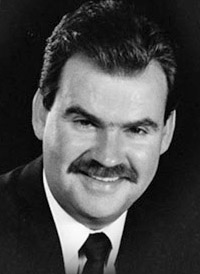
Pat-BurnsI’m not much of a hockey fan, but I do keep track of the Montreal Canadiens. That means, like fans of the other National Hockey League teams he coached (the Toronto Maple Leafs, Boston Bruins and New Jersey Devils), I was saddened by the death of Pat Burns in 2010.

I was impressed with the former cop’s tough-guy approach which rallied my Habs, then went on to rally the Leafs before finally winning a Stanley Cup with the Devils. Burns wasn’t an NHL player who was handed a coaching career; he worked his way up the ranks with determination.

He was weakened, gaunt and admitting the end was not far off when the Toronto Star’s Rosie Dimanno wrote a wonderful column about him. In it, she mentioned a recent interview in which Burns, 58, “spoke even about a newly realized appreciation for religious faith, because a person gets to thinking about God and prayer and the hereafter when staring straight into the abyss.”

This stuck with me, because the majority of my life is now behind me. That certainly changes a person’s perspective and I’m glad to have come to an “appreciation for religious faith” without having to stare into the “abyss” first.

That may not seem important to some folks. They’re busy with family or careers or pursuing fame or riches at the gambling table or extreme sports. The list can go on and on.

And yet, even in wealthy North America, with our massive healthcare systems and long lifespans – much longer than the age of Pat Burns – the end can come upon us with the shock of a shovel in the stomach.

I didn’t need such a shock to be reminded of that fact. I just read a ‘tweet’ on Twitter from Rick Warren (he wrote a book you may have heard of, The Purpose Driven Life) that simply stated, “When I’m tempted to be prideful, I just remind myself that I cannot even guarantee my next breath.”

That’s right, folks. It doesn’t matter if you’re battling cancer like Pat Burns did, or you’re a disgustingly young and fit triathlete. The end can come before you finish reading this sentence.

I think Jesus Christ (who most Christians believe is the son of God) knew this. That’s why, in the Bible, he told his followers, “Don’t hoard treasure down here, where it gets eaten by moths and corroded by rust or—worse—stolen by burglars. Stockpile treasure in heaven, where it’s safe from moth and rust and burglars. It’s obvious, isn’t it? The place where your treasure is, is the place you will most want to be, and end up being.

It seems to me that if our “treasure” is in the right place, then the end won’t be an “abyss”. In fact, it won’t be the end at all. It will just be the end of the beginning.

Do you agree? Yes or no, post your response below and let’s have a conversation.

Read Full Post »

13+-+1-1

Actress Keira Knightley has earned adulation for the great movies she’s done since coming to fame in 2002 with Bend It Like Beckham. But do her thoughts on atheism and faith reflect reality?

I’m sure some folks agree with her. But for those who follow Jesus of Nazareth (who many people believe is the Son of God), forgiveness and guilt simply don’t work that way.

For Jesus followers, life isn’t a game where you do whatever you want, then sleepwalk through a hollow ritual of asking for forgiveness and assume God is a kindly, but dimwitted dolt who can’t see through your deception.

Consider these words from an ancient writer:

You [God] know when I sit down and when I get up. You know my thoughts from far away. You know where I go and where I lie down. You know everything I do. Lord, you know what I want to say, even before the words leave my mouth.

Does this sound like a creator Keira Knightley or anyone else can trick?

Forgiveness is available to everyone who accepts the gift God offers the world: Jesus. Primary source documents about His life indicate that Jesus died to make up for the wrong things we’ve done and the right things we’ve failed to do.

What Jesus did is a big deal. And those who truly accept that gift and make Him their lord and savior understand that. So they don’t treat it with contempt. In fact, a guy named Paul, who helped spread the good news about Jesus through the Mediterranean, addressed this very notion in one of his letters:

So, do you think we should continue sinning so that God will give us even more forgiveness? No! We died to our old sinful lives, so how can we continue living with sin?

Now, what about Keira’s assertion of living with guilt? If you’re still with me, you may have figured out by now that forgiveness is real and important and all-encompassing. In fact, for some people, it’s a life-changer and you can read one example here: http://wp.me/p2wzRb-6K

Forgiveness also means you’re no longer guilty. If you follow Jesus and sincerely ask for forgiveness, you’ll get it and the wrong you’ve done is wiped from the books. So there’s no need to “live with guilt”, as Keira puts it.

Does this make sense? Yes or no, post your comments below and let’s have a conversation.

Read Full Post »

« Newer Posts - Older Posts »