Feeds:
Posts
Comments

Archive for the ‘Me & The World’ Category

plastic-window-insulationYe gotta like it when innocuous little moments shine a light on something big in your life. That  happened one winter day when my father-in-law helped me install a plastic insulation barrier on a wind-blasted bedroom window.

We were applying two-sided tape to the window frame—it holds the barrier in place—when Fred complained that every time he unrolled the tape, it would wind itself up again.

I heard his words and instantly realized: this is a metaphor for my life. So often I launch self-improvement projects to:

  • listen better;
  • remember more (just ask my wife about my horrible memory for anything recent);
  • become more aware of when I’m being petty;
  • stop giving with my hand out to receive thanks/praise and;
  • value family relationships more (gee, Frank, would the occasional phone call to your brothers kill you?)

Guess what happens to those initiatives? Like the two-sided insulation barrier tape, every time I unwind them, they spool back up and I have to start over.

I sense this happens with a lot of people. We’re taught to do everything ourselves because only incompetent people ask for help. And we keep on believing this, even though our failed projects stare us in the face like a blinding spotlight.

When I consider the spooled-up tape of my initiatives, the conclusion is obvious: I can’t improve myself alone, no matter what any self-help book says. I don’t believe any of us can. We’re just too burdened with leftover childhood issues, with relationships that leave us burning with anger or disappointment, with unbreakable bad habits, and with emotionally crippling betrayals.

Does it make sense to write that we need help from someone more powerful; someone who’s not battling emotional issues; someone who always, ALWAYS has time for us, no matter how annoying or frustrating we can be?

I found something written by an ancient follower of Jesus of Nazareth (who many people believe is the Son of God) that refers to this help: “Jesus has been through weakness and testing, experienced it all—all but the sin. So let’s walk right up to Him and get what He is so ready to give. Take the mercy, accept the help.”

For me, I simply ask for that assistance through prayer. And if you don’t feel capable or ready to pray, one of Jesus’s earliest followers talks about that, too: “If we don’t know how or what to pray, it doesn’t matter. God’s spirit does our praying in and for us, making prayer out of our wordless sighs, our aching groans.

After praying, things can start to happen. It might be something supernatural—suddenly, your desire to listen better is actually fulfilled. Or it might be God working through a colleague or relative who has surprisingly sage words of advice, or makes an unexpected commitment to hold you accountable.

I don’t have to pray about the insulation barrier; Fred and I got it nicely installed. But all my other, more important improvement projects? That’s another matter….

Read Full Post »

devotedI found an essay called “10 Signs You’re a Devoted Christian” on the Internet and, as I read it, I realized it presented an excellent opportunity to clear up some misconceptions about people of faith. Read these highlights and see if you’ve had any of these opinions:

Christians deny the existence of thousands of gods claimed by other religions, but feel outraged when someone denies the existence of your god.

Well, lots of Christians I know are not the least bit “outraged”. In fact, some of us are happy to talk with anyone who denies the existence of a creator. It usually makes for very interesting conversation.

  • You feel insulted and ‘dehumanized’ when scientists say people evolved from lesser life forms, but you have no problem with the Biblical claim that we were created from dirt.

Um, no. I don’t know for absolute certain how we were created, other than it was God who did it. What else do I need to know on this subject?

  • You laugh at polytheists, but you have no problem believing in a trinity god.

Maybe some Christians laugh at people who believe in more than one god. But most of us don’t. Does that mean we’re not “devoted” Christians?

  • Your face turns purple when you hear of atrocities attributed to Allah, but you don’t even flinch when hearing about how God slaughtered all the babies in Egypt in ‘Exodus’ or ordered the elimination of entire ethnic groups in ‘Joshua’.

Lots of Christians, including me, DO flinch when we read about these things in the Bible. No one can claim to understand all the Bible. But I suggest you check out the Christian Apologetics and Research Ministry (http://carm.org/) to thoroughly investigate the things you find so objectionable.

  • You laugh at Hindu beliefs that deify humans and Greek claims about gods sleeping with women, but you have no problem believing the Holy Spirit impregnated Mary, who then gave birth to a man-god who got killed, came back to life, then ascended into the sky.

You must have encountered a few Christians who ridiculed other faiths and decided this is what ‘devoted’  Christians are like. I hope my responses open your mind to other possibilities.

  • You believe that the entire population of this planet, except those who share your beliefs, will spend eternity in Hell. Yet you consider your religion tolerant and loving.

I believe God gives the gift of choice to all people who have been accurately told about who He is and the gift He’s offered to everyone on this planet – Jesus Christ. If people choose to reject Christ and spend eternity separated from God, then that’s their free will.

  • You define 0.01% as a ‘high success rate’ when it comes to answered prayers, and you think the remaining 99.99% failure was simply God’s will.

Where did these percentages come from? Who did the research and how? Prayer is a mystery because it involves a mix of God’s will and our very imperfect will. But does that make it useless? Hardly.

  • You know less about the Bible, Christianity and church history than most atheists and agnostics, but still call yourself a “Christian”.

This is an enormous generalization. I think it’s safe to say that most agnostics know nothing about the Bible because they just don’t care about spirituality. That said, the lack of knowledge about the Bible and church history on the part of many Christians is sad.

So, are you surprised at the responses to these assertions? Post your thoughts below and let’s have a conversation.

Read Full Post »

Glass half fullIs the glass half-full or half-empty?

That’s the essence of what atheist blogger Staks Rosch is getting at when he wrote a piece for the Huffington Post called “Dear Pope, Atheists don’t need redemption”.

Here’s a key excerpt:

I don’t believe humans are evil sinners in need of redemption. I don’t see the glass as half empty. I think people are more nuanced than that. We do good things and we do bad things.

First of all, let me write that I would dearly LOVE to agree with Staks. In fact, for many years I was onside with his main points. And it’s hardly a stretch to say that yes, we do good things and bad things.

So what happened?

Simply put, I came to ask these questions: what do we do about the bad things we do? And what do we do about the good things that we FAIL to do?

I’m not talking about destroying skyscrapers or failing to stop genocide – for most of us, such “sins” are as relevant as contemplating life on Mars. I’m talking about when I’m blatently insensitive to my wife or find an excuse not to help a friend in need because it makes me uncomfortable.

What does Staks Rosch do about these things? Apparently, nothing except writing that “I have come to understand that people generally try to be the best they can.”

And to that point, I have to sadly disagree.

In well-off North America it’s easy to be distracted by shiny things (oooh, a new iPad! And look what dumb thing that politician/movie star did today!). But if you and I pay attention to what’s really happening in this world, we would have to admit that people generally DON’T try to be the best they can. I can think of no other explanation for:

  • Thousands of child soldiers in Africa;
  • Rampant sex slavery in southeast Asia (supported by western ‘sex tourists’);
  • Massive corruption in developing nations (aided by North American companies like engineering giant SNC Lavelin);
  • Cash-strapped western governments cutting social services, but propping up banks.

When I think about these things, I have no trouble believing this quote from one of the earliest and most influential followers of Jesus of Nazareth (who many people believe is the Son of God): “All have sinned and are not good enough to share God’s divine greatness.

Staks Rosch doesn’t face this truth in his blog. But lots of people do face it. And some of them, like me, decide to follow Jesus because we need REAL, PERMANENT good news.

The good news is by believing that Jesus sacrificed his life to wipe out the bad things we’ve done and the good things we’ve failed to do, we also welcome Him to change us. To make us more like Him.

And, if you believe life goes beyond 70 or so years on this planet, then that good news is permanent. When I’m done with this life, I’ll face God’s judgement. And I’ll come through that judgement scott-free because of what Jesus did for me.

He can do it for you, too. So, what do you think? Post your thoughts below and let’s have a conversation.

Read Full Post »

GlassOfWater“Why can’t you just be good?”

That was the question a frustrated relative posed during a faith discussion at a social event. The question was aimed at me because I was the only person at the event who followed Jesus of Nazareth (who many people believe is the Son of God) and the topic was getting to Heaven.

Just be good and you’ll be welcomed inside the pearly gates, right? As far as I can tell, that’s the point of view held by most people in our culture.

So why isn’t it true? Well, consider this: the residents of Walkerton, Ontario — a small town in central Canada — thought their water supply was good. You could pour a glass, hold it up to the light and it looked perfectly fine to drink.

But it wasn’t. In 2000, many residents began to experience bloody diarrhea and infections. Local officials insisted the water was drinkable, until the skyrocketing number of contamination cases caused the region’s medical officer of health to issue a “boil water advisory”.

It turns out the water was infected with deadly E.coli bacteria and by the time the crisis ended, 2,500 people (half the town’s population) became ill and seven died.

This may seem like an extreme case to you, but trust me, there isn’t a particle of water on this planet that is absolutely pure. No matter how clear and clean it appears.

And that’s the case with human beings. No matter how good some of us seem to be, no matter how generous, no matter how well-adjusted, every one of us has defects.

Looking for evidence? Consider this excerpt from a letter written by one of the ancient Jesus followers: “All have sinned and are not good enough to share God’s divine greatness.” Sadly, nothing has changed since those words were written about 2,000 years ago and that’s why you can’t “just be good” and get into Heaven.

But there is a solution. Most Jesus followers believe what the ancient prophets wrote and they claimed God did something about our inability to become truly good. He gave us the gift of Jesus.

Here’s what Jesus did:

  • He lived with us;
  • He taught us who God is and how we can welcome Him into our lives;
  • He allowed government authorities to put him to death, so that ALL the wrongs committed by anyone who believes in Him and follows Him would be paid for and wiped out of existence;
  • He came back to life to defeat the power of death, prove He is the Son of God and provide a way for all humanity to live with Him forever in Heaven.

I see this as incredibly good news. How about you? Post your thoughts below and let’s have a conversation.

Read Full Post »

Deluded Does being born and raised into your “religious” faith make you a deluded person? Absolutely, according to atheist John Loftus. His fascinating essay is called “The Top Ten Marks of a Deluded Person” and I’m happy to engage John on all his points.

1. John says being born and raised into a faith makes you delusional for this reason: “Just taking the odds at face value, this is non-controversial and undeniable given the number of religions propagated around the globe and adhered to with utter and complete confidence as the one true faith.”
Do you understand that? Me neither. And I’ve read a lot of “religious” books and engaged in many debates with atheists. Maybe someone can explain it for me.

2. As an adult, never adopts nor cultivates the adult attitude of doubt. John says “All adults must revisit the religious faith taught to them by their parents,” and I absolutely agree.
God agrees, too. In a letter written by one of the earliest followers of Jesus of Nazareth, Jesus followers are encouraged to “work out your salvation with fear and trembling”. Did you know that, John?

3. Never reads widely or is exposed to other points of view in the media.
We agree on this one, too. I’m always saddened when I encounter Jesus followers who know nothing about other faiths or about the burning issues of the day. It’s embarrassing.

4. Does not travel widely, including travel into different cultures.
Not so fast, John. Maybe you have the resources to wander all over this glorious planet. But many, many people (some of them atheists), don’t. So that hardly makes anybody deluded.

5. Never studies deeply into the nature of his or her adopted faith.
Yes! I’m also embarrassed when I chat with fellow Jesus followers and get a blank stare when I mention a well-known Jesus follower or event in history. So now I can ask you, John: have you studied deeply into the nature of your atheistic faith?

6. Lies in order to defend one’s faith. “If you have to lie to defend your faith, then you need help,” John writes.
And I nod my head in vigorous agreement.

7. Preaches to people who think differently, rather than rationally engaging them.
Once again, John and I see the same way. That’s why Frank’s Cottage is focused on starting conversations with readers. I end every essay with that invitation.

8. Claims he or she does not need evidence to believe.
Ya, that’s a silly claim. Do I have all the evidence I want? Nope. If I did, it wouldn’t be called “faith”. But do I have enough? Absolutely. Just as I imagine John has enough to believe in his faith.

9. Must be convinced that his or her faith is impossible before seeing it as improbable.
John seems to think that if he can show that someone’s faith is improbable, that should be enough. OK, John. What if someone demonstrated that atheism is an improbable faith. Would you be willing to change your mind?

10. Must denigrate the sciences in order to have faith. “Faith demands it,” John added.
I disagree. As far as I’m concerned, science shows us more about God. And I’ve written about just a few of the Jesus followers currently starring in the science world here: http://wp.me/p2wzRb-3o.

So, am I deluded because I follow Jesus? Or are you surprised at how often John and I agreed? Post your thoughts below and let’s have a conversation.

Read Full Post »

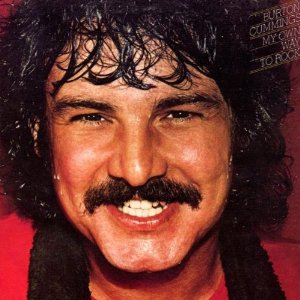
BurtonCummingsHe visited a church. It left him so “scared” that he wrote one of his best-known songs about the experience. But what happened – or didn’t happen – after?

I’m referring to Burton Cummings, the pride of Winnipeg, Manitoba, leader of the Guess Who, one of Canada’s best known classic rock bands and a well-known solo singer/songwriter/pianist.

During the 1970s, Cummings was in New York City and visited St. Thomas Church. His time inside that glorious cathedral was so moving, he wrote ‘I’m Scared’, a song on his first solo CD that he still performs today.

Stopped by to see St. Thomas, on a cold and dreary New York afternoon
Something in the air was oh so rare
I don’t know what it was but I know that it’s still right there
and I’m scared.

As Cummings said years later, during a reverential 2011 YouTube video tour of the church, “There was a presence, definitely a presence”.

In fact, the lyrics to ‘I’m Scared’ say this:

Never been much on religion, but I sure enough would like to hear the call.
Come on now, give me a sign you’re listening to me
You hear me talking, you hear me crying, it’s confusing to me Lord, I’m terrified.

So as far as I can tell, God DID give him a sign He was listening. He knew about Cummings’ spiritual emptiness, brought him to St. Thomas Church and touched his soul in a way he’d probably never before experienced.

And yet, every other recording, TV or radio interview, video (including one on his latest studio CD, Above The Ground, which is laced with F-bombs) and all the blogs on his website make it clear that Cummings didn’t respond to God. God gave him a sign and Cummings turned his eyes away.

Certainly, that’s the easiest thing to do in our culture, which seems to regard most spirituality with suspicion and followers of Jesus of Nazareth with outright contempt. But in doing the easy thing, Cummings is still left with a spiritual hole – just read between the lines of his blog entries and you can see it for yourself.

For many years, I did the same thing as Cummings. Through my experiences and encounters with people who followed Jesus, God reached out to me and invited me to connect with Him through His Son.

It had almost nothing to do with “religion”, but everything to do with a life-long, life-enhancing relationship that would continue after my time on this planet is done. And until 2002, I ignored it.

Has this ever happened to you? Do you recall an experience laced with a presence you can only call “God”? If yes, why not revisit it? Then post a comment below (or, if you want more privacy, email me at fdking@hotmail.com) and let’s have a conversation.

Read Full Post »

“People go to church for the same reasons they go to a tavern: to stupefy themselves, to forget their misery, to imagine themselves, for a few minutes anyway, free and happy.”
Mikhail Bakunin (1814-1876)

MikhailBakuninWow; how’s THAT for a shot across the bow of anyone with a faith life? I stumbled upon this provocative quote on the internet the other day and it definitely caused my mental wheels to spin.

While I’m sure some of you agree with this Russian philosopher and revolutionary (he was a contemporary of communism co-founder Karl Marx), how about taking a moment to be open-minded and read something from the “other side”?

Going to church is like going to a tavern? Well, there are similarities. Both are social activities, since they include interacting with others in a confined space.

Forgetting our miseries? Yes, there’s some commonality there, too. Just as there is between attending church and going to a rock concert or a play or a movie. For those hours, we leave our lives at the door and enter into a new experience.

“Imagining” myself free and happy? Bakunin, who never saw a revolution that he didn’t like or try to encourage (no matter how pointless or violent), might dismiss church like this, but he certainly didn’t have all the answers to life. No one does.

But I will say this: I AM free and happier as a church-going man.

I am free from the guilt associated with all the bad things I’ve done and all the good things I’ve failed to do, because of the death of Jesus of Nazaareth (who many people believe is the Son of God).

His sacrificial death, for anyone who believes in Him and follows Him, means my “sins” have been wiped from the books. Want evidence? Then consider these words from an ancient Jesus follower’: “Jesus is the way our sins are taken away. And he is the way all people can have their sins taken away, too.”

Knowing what Jesus has done for me (and for you too, if you want it) makes me happier. It also makes me want to invite Him into my life so I can become more of the person He knows I can be.

The way Bakunin saw it, going to a tavern and going to church are equally useless. But attending church has transformed many lives for the better — and for eternity. Can you credibly make the same case for any tavern, pub or bar? Post your response and let’s have a conversation.

Read Full Post »

StanleyMilgramWhile in Toronto (Canada’s largest city), I visited the Ontario Science Centre and discovered an exhibit on Stanley Milgram (1933-84), a psychologist best known for a controversial 1960s human behavior study.

The science centre exhibit was all about Milgram’s study and I couldn’t leave until reading all the information panels and watching the video.

In his experiment, participants were instructed to “teach” students in an adjacent room who were supposedly hooked up to electric shock machines. Students were asked questions and every time they answered incorrectly, the participants were told to administer a corrective shock.

In reality, no one was given a shock, but pre-recorded sounds were played that made it sound like the students were reacting in pain to the shocks. And those sounds (screams, pounding on the wall) grew in volume and intensity as each incorrect answer was given and the resulting voltage level of the “shock” was increased.

How did participants react? If they asked to stop the experiment, they were requested (at first), then told they had to continue. If they still said no, the experiment ended, but if they continued, the experiment often didn’t stop until the student was given the maximum 450-volt “shock” three times.

What’s amazing is most participants continued when assured they would not be held responsible. In fact, in each version of the experiment, between 61 and 66 per cent of the participants went all the way to administering what they believed were life-threatening shocks.

How would I react in this situation? Would I trust in the authority figure and potentially kill someone, especially if I believed I wouldn’t be held responsible?

History is rife with evil people claiming what they did wasn’t their fault. Some of the most infamous Nazis used this “I was just following orders” defence when they were put on trial. Would I do the same thing? Or, as a serious follower of Jesus of Nazareth (who many people believe is the Son of God), would I realize that I had no business handing over authority to people who are as hugely imperfect as I am?

In the end, I believe you and I can confidently give the power of authority over our lives to the same person that Jesus gave authority to: God.

Jesus prayed to God just hours before he was taken into custody on false charges, sentenced to death, then hung on a Roman cross between two criminals. Knowing what was about to transpire, he prayed “Father, if you are willing, take away this cup of suffering. But do what you want, not what I want.”

The result of Jesus giving authority to his creator – the same creator responsible for you and me – was not just death. It was resurrection. It was the gift of forgiveness of all moral crimes offered to every single person on this planet. And whether you accept it or not, what Jesus did changed the world forever.

So, whatever’s going on in my life, I’m going to follow Jesus and give ultimate authority to the only person who is absolutely, completely trustworthy. How about you? Post your answer below and let’s have a conversation.

Read Full Post »

RickyGervaisThe online article is called “My Argument With God: How I went from Jesus-loving Christian to fun-loving infidel…in one afternoon”. Written by Ricky Gervais, it details how the British actor/comedian rejected his faith.

Fascinating reading? Definitely. The pivotal moment came when Gervais (who created the mega-successful TV comedy The Office) was just eight years old and was asked by his 19-year-old brother why he believed in God.

Here’s what happened next, straight from the article:

“(It was) just a simple question. But my mum panicked. ‘Bob,’ she said, in a tone that I knew meant “shut up”. Why was that a bad thing to ask? If there was a God and my faith was strong, it didn’t matter what people said.

“Oh…hang on. There is no God. He [Gervais’ brother] knows it and she knows it, deep down. It was as simple as that. I started thinking about it and asking more questions and within an hour, I was an atheist.”

That’s it. Gervais made a decision as a child, apparently without talking about it with his mother, brother or anyone else (the article doesn’t say to whom he asked his questions, so I’m assuming the ‘conversation’ took place inside his head). And the rest of the article makes it clear that he never bothered to revisit it.

Astonishing? From one point of view, not at all. I don’t think I’m being paranoid when I write that in most of Europe and North America, Jesus followers are held in contempt by a majority of the media, by the entertainment industry and by most atheists. That’s definitely the case in Canada, where I live. So Gervais made his life easier by joining the majority.

On the other hand, what leaves me stunned is that Gervais has apparently never reconsidered a decision made when he had pretty much no knowledge or experience about anything. Heck, his brain wasn’t even close to fully formed yet. And it’s a decision that even the most militant atheist or agnostic will probably agree is very important.

I wonder; are there any areas of my life where I’ve made important decisions as a child and have been too proud or ignorant to review them? How have these decisions made my life poorer? How have they closed off my mind and my heart to making changes?

Thankfully, one of those areas hasn’t been my spiritual life. I wrestled with questions about God, Jesus and faith for many years. I debated Jesus followers, read several books and finally decided (at age 41) that despite not having all my questions answered, the best thing I could do with my life and future is to follow Jesus, now and for all eternity.

What about you? Did you reject God and His son years ago and never revisit your decision? Are you humble enough to admit it might be worth reconsidering? Post a comment below and let’s have a conversation.

Read Full Post »

DeleteKeyI think all us email users can agree on this: often, there is no better button on our keyboard than ‘delete’.

“Earn your degree while you earn a living!” DELETE.

“Browse local Asian singles near you!” DELETE.

“Prepare for a job in law enforcement!” DELETE.

(Ever notice how these spammers are addicted to exclamation marks?)

“Don’t pay your next cable bill without reading this!” DELETE.

As we go through this routine, it occurs to me that most of us probably wish we could whack a delete key on some things that we’ve done and said. Or things we should have done & said, but didn’t.

  • I’d love to erase the hurtful things I’ve said to my wife.
  • I wish I could delete those times I’ve cut off other drivers.
  • I’d sure like to wipe out all those negative thoughts I’ve had about my abilities.
  • I wish I could delete those times when I’ve reacted hastily without getting all the facts.
  • Wouldn’t it be great to erase that dumb thing I did at work last week?

For people like me, who’ve decided to follow Jesus of Nazareth (who many people believe is the Son of God), there’s a great thing to know and make a part of our lives: God’s favourite button is also DELETE.

The mistakes I’ve made? Gone. Those times I should have said something helpful to a co-worker, but simply walked away silent? Wiped out.  That relationship that went sour because of me? Eliminated.

How about you? The contractor you paid under the table to avoid taxes? It could be gone. Those nasty things you’ve thought or said about your relative? They could be wiped out.

How far can this go? If you believe in a creator who cares about everything that goes on in our lives, then all the way to something this trivial: all the occasions when I carelessly deposited perfectly recyclable things into the garbage? Deleted.

How do I know this? Well, consider these words from an ancient Jesus follower: “Jesus was offered as a sacrifice one time to take away the sins of many people.”

One of those people is me. And it could be YOU, too.

If you accept this sacrifice, another ancient Jesus follower wrote “There is no condemnation for those who belong to Christ Jesus.”

As a pastor friend, Adrian van Giessen, told people once, “When you belong to Jesus, then all the stuff that God can look at and say ‘you did this and you did that,’ he wipes it away and says, ‘I see you as I see Jesus’.”

I looooooove having God see me, with all my glow-in-the-dark imperfections, just as He sees His Son: perfect, without a single blemish. It empowers me to do better, to try to live up to how God sees me – even as I know that when I fall short, He hits the DELETE key, because, as Adrian put it, I “belong to Jesus”.

What do you think…does this make sense? Post a comment below and let’s have a conversation.

Read Full Post »

« Newer Posts - Older Posts »