Feeds:
Posts
Comments

Posts Tagged ‘Frank’s Cottage’

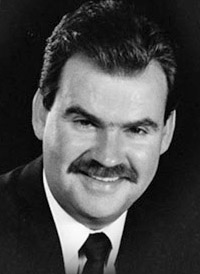
Pat-BurnsI’m not much of a hockey fan, but I do keep track of the Montreal Canadiens. That means, like fans of the other National Hockey League teams he coached (the Toronto Maple Leafs, Boston Bruins and New Jersey Devils), I was saddened by the death of Pat Burns in 2010.

I was impressed with the former cop’s tough-guy approach which rallied my Habs, then went on to rally the Leafs before finally winning a Stanley Cup with the Devils. Burns wasn’t an NHL player who was handed a coaching career; he worked his way up the ranks with determination.

He was weakened, gaunt and admitting the end was not far off when the Toronto Star’s Rosie Dimanno wrote a wonderful column about him. In it, she mentioned a recent interview in which Burns, 58, “spoke even about a newly realized appreciation for religious faith, because a person gets to thinking about God and prayer and the hereafter when staring straight into the abyss.”

This stuck with me, because the majority of my life is now behind me. That certainly changes a person’s perspective and I’m glad to have come to an “appreciation for religious faith” without having to stare into the “abyss” first.

That may not seem important to some folks. They’re busy with family or careers or pursuing fame or riches at the gambling table or extreme sports. The list can go on and on.

And yet, even in wealthy North America, with our massive healthcare systems and long lifespans – much longer than the age of Pat Burns – the end can come upon us with the shock of a shovel in the stomach.

I didn’t need such a shock to be reminded of that fact. I just read a ‘tweet’ on Twitter from Rick Warren (he wrote a book you may have heard of, The Purpose Driven Life) that simply stated, “When I’m tempted to be prideful, I just remind myself that I cannot even guarantee my next breath.”

That’s right, folks. It doesn’t matter if you’re battling cancer like Pat Burns did, or you’re a disgustingly young and fit triathlete. The end can come before you finish reading this sentence.

I think Jesus Christ (who most Christians believe is the son of God) knew this. That’s why, in the Bible, he told his followers, “Don’t hoard treasure down here, where it gets eaten by moths and corroded by rust or—worse—stolen by burglars. Stockpile treasure in heaven, where it’s safe from moth and rust and burglars. It’s obvious, isn’t it? The place where your treasure is, is the place you will most want to be, and end up being.

It seems to me that if our “treasure” is in the right place, then the end won’t be an “abyss”. In fact, it won’t be the end at all. It will just be the end of the beginning.

Do you agree? Yes or no, post your response below and let’s have a conversation.

Read Full Post »

13+-+1-1

Actress Keira Knightley has earned adulation for the great movies she’s done since coming to fame in 2002 with Bend It Like Beckham. But do her thoughts on atheism and faith reflect reality?

I’m sure some folks agree with her. But for those who follow Jesus of Nazareth (who many people believe is the Son of God), forgiveness and guilt simply don’t work that way.

For Jesus followers, life isn’t a game where you do whatever you want, then sleepwalk through a hollow ritual of asking for forgiveness and assume God is a kindly, but dimwitted dolt who can’t see through your deception.

Consider these words from an ancient writer:

You [God] know when I sit down and when I get up. You know my thoughts from far away. You know where I go and where I lie down. You know everything I do. Lord, you know what I want to say, even before the words leave my mouth.

Does this sound like a creator Keira Knightley or anyone else can trick?

Forgiveness is available to everyone who accepts the gift God offers the world: Jesus. Primary source documents about His life indicate that Jesus died to make up for the wrong things we’ve done and the right things we’ve failed to do.

What Jesus did is a big deal. And those who truly accept that gift and make Him their lord and savior understand that. So they don’t treat it with contempt. In fact, a guy named Paul, who helped spread the good news about Jesus through the Mediterranean, addressed this very notion in one of his letters:

So, do you think we should continue sinning so that God will give us even more forgiveness? No! We died to our old sinful lives, so how can we continue living with sin?

Now, what about Keira’s assertion of living with guilt? If you’re still with me, you may have figured out by now that forgiveness is real and important and all-encompassing. In fact, for some people, it’s a life-changer and you can read one example here: http://wp.me/p2wzRb-6K

Forgiveness also means you’re no longer guilty. If you follow Jesus and sincerely ask for forgiveness, you’ll get it and the wrong you’ve done is wiped from the books. So there’s no need to “live with guilt”, as Keira puts it.

Does this make sense? Yes or no, post your comments below and let’s have a conversation.

Read Full Post »

Open DoorThe headline said ‘Extremism’s appeal for Canadian radicals’. That didn’t sway me to read the article in the National Post, one of Canada’s major newspapers. But what did intrigue me was the one-word “subhead”: ‘Superiority’.

A police officer, trying to figure out what was turning some young Canadians into violence-supporting radical Islamists, did extensive interviews with seven young Toronto men (six of them born in Canada) who fit the bill.

After the interviews, the officer came to the conclusion that they were deeply troubled men who, the reporter wrote, “found, in extremism, a reason to feel superior. In their minds, the had joined an exclusive fraternity that knew the truth. They weren’t losers after all; they were better than everyone else.”

Two things strike me about this:

1. The contrast of being a “loser” and feeling “superior”. Our culture loves nothing more than to constantly rank the value of people. It’s one of the main reasons that I decided to take my own radical turn and declare myself a follower of Jesus of Nazareth, who many people believe is the Son of God.

Jesus followers know that we are neither losers nor superior. The evidence for this can be found in a letter from one of Jesus’s earliest and most influential followers: “There is no difference between Jew and Greek, slave and free person, male and female. You are all the same in Christ Jesus.

This may not be important to many people, but I need that reminder for those times when I see someone do or say something stupid. That’s when the Bible reminds me that I, too, do and say stupid things. The key difference is that, as a follower of Jesus, I welcome Him into my life to make me more like Him. And He never did or said a single stupid thing.

2. Can there be a more obnoxious word in our dictionary than “exclusive”? It comes from the word “exclude” and when it comes to thinking about my brothers and sisters in the human race, I have trouble understanding what possible good can come from excluding anyone.

Now you might be thinking “Well, you Christians think you’re in an exclusive club, that only YOU get to go to Heaven.”

To that I write that yes, when I’m done with this life, I have a certainty about where I’m going and I feel sure that I’ll see other followers of Jesus there. My confidence comes from one of the four original-source biographies of Jesus’s physical life on earth’: “God loved the world so much that he gave his only Son, so that everyone who believes in him would not be lost, but have eternal life.

But exclusive? Not on your life. There is no lock on the doors to Jesus. In fact, there are no doors at all. The way is wide open to anyone who wants to enter.

That openness is why I’ve written this blog – to invite YOU to enter and have your life changed for the better – now and for eternity – by Jesus. Will you accept the invitation? Yes or no, post your response below and let’s have a conversation.

Read Full Post »

Original Cinema Quad Poster - Movie Film PostersLike death, taxes and reality TV, giving someone or something the benefit of the doubt is an ever-present part of life, even when we don’t know it.

I like Wikipedia’s definition the phrase: A favourable judgement given in the absence of full evidence.

My wife did this the other day when, while at work, she emailed the names of a half-dozen fruits and vegetables to add to my grocery shopping list. She gave me the benefit of the doubt that I’d see the email and buy those items without her having to phone and check up on me. (A risky move on her part, I’ll admit.)

This approach is the foundation of most of our thinking:

  • We fly thousands of feet above the ground without evidence that every bit of the airplane is in perfect working order;
  • We drive our cars without being absolutely certain the muffler won’t fall off;
  • We marry someone even though there’s no scientific way to prove they will always be faithful;
  • We pay to watch a movie with only the presence of a favourite actor as evidence we’ll enjoy it.

Giving benefit of the doubt is also the meeting point for me and Jesus of Nazareth (who many people believe is the Son of God). Before deciding to follow Jesus, I had many tough, in-depth debates with some brave Jesus followers who were willing to field my questions and charges.

I still recall one conversation with a friend who, like me now, didn’t understand everything about his faith and didn’t have all the answers to my questions (or his). But he did ask me this: would I be willing to give God the benefit of the doubt, just as he had?

I didn’t answer immediately, but over time I said yes because I figured it would put me in a much better place, now and for eternity. And that’s exactly what it’s done.

Since then, I’ve come to realize that giving God the benefit of the doubt, day after day, is part of following Jesus. Why? Because it’s a powerful and necessary reminder that God is God and I am NOT. I like how an ancient writer defines it: “Faith makes us sure of what we hope for and gives us proof of what we cannot see.

Spiritual faith is such a tough concept for our culture that many people would rather put their faith in a parachute or a bungee cord. But if you want it – if you’re ready to give God the benefit of the doubt, just as you do for countless other things – then you can have your life transformed. And you can be where Jesus most wants you to be: by His side, in Heaven, forever.

Do you agree? Do you think I’m crazy? Post your thoughts below and let’s have a conversation.

Read Full Post »

ChickenManureIt’s safe to write that this was not the kind of international media attention the Canadian city of Abbotsford, British Columbia wanted to achieve.

Like most large cities, there are homeless people in Abbotsford and they like to gather in a spot called “The Honey Tree”. Apparently some folks weren’t happy about that because city workers dumped chicken manure at the site.

An attempt to drive the homeless away? That’s certainly the logical answer, but nobody at the city said so. Especially when the move attracted international attention and widespread criticism. Instead, city officials scrambled to undertake an investigation and the mayor held a news conference to apologize.

As I read articles on this controversy, I was forced to confront my own discomfort with homeless people. Often, they are unkempt and smelly. Often, they are mentally ill. Often, they want money from me – to buy something I may not approve of.

But I follow Jesus of Nazareth (who many people believe is the Son of God), and one of the original source documents about His life on earth says “God loved the world so much that he gave his only Son, so that everyone who believes in him would not be lost but have eternal life.

As far as I’m concerned, that statement means God loves the homeless people of Abbotsford, British Columbia every bit as much as he loves me or Taylor Swift or the British Royals. That also means Abbotsford’s homeless have the same intrinsic value as billionaires and Hollywood royalty.

Our culture doesn’t think so – the actions of Abbotsford’s city staff are certainly evidence of that – but it’s why I follow Jesus. He hung out with the marginalized people of ancient Israel and He often made it clear that the “in” people of that place were the ones he had issues with.

My own discomfort aside, I want to be more like Jesus. I want to pay less attention to what our broken world thinks is “cool” and pay attention to what He thinks. Because like all serious Jesus followers, I believe he lived, died and came back to life for people like me. And people like the homeless of Abbotsford, British Columbia. And people like YOU. All you have to is accept the gift.

Agree? Disagree? Post your thoughts below and let’s have a conversation.

Read Full Post »

plastic-window-insulationYe gotta like it when innocuous little moments shine a light on something big in your life. That  happened one winter day when my father-in-law helped me install a plastic insulation barrier on a wind-blasted bedroom window.

We were applying two-sided tape to the window frame—it holds the barrier in place—when Fred complained that every time he unrolled the tape, it would wind itself up again.

I heard his words and instantly realized: this is a metaphor for my life. So often I launch self-improvement projects to:

  • listen better;
  • remember more (just ask my wife about my horrible memory for anything recent);
  • become more aware of when I’m being petty;
  • stop giving with my hand out to receive thanks/praise and;
  • value family relationships more (gee, Frank, would the occasional phone call to your brothers kill you?)

Guess what happens to those initiatives? Like the two-sided insulation barrier tape, every time I unwind them, they spool back up and I have to start over.

I sense this happens with a lot of people. We’re taught to do everything ourselves because only incompetent people ask for help. And we keep on believing this, even though our failed projects stare us in the face like a blinding spotlight.

When I consider the spooled-up tape of my initiatives, the conclusion is obvious: I can’t improve myself alone, no matter what any self-help book says. I don’t believe any of us can. We’re just too burdened with leftover childhood issues, with relationships that leave us burning with anger or disappointment, with unbreakable bad habits, and with emotionally crippling betrayals.

Does it make sense to write that we need help from someone more powerful; someone who’s not battling emotional issues; someone who always, ALWAYS has time for us, no matter how annoying or frustrating we can be?

I found something written by an ancient follower of Jesus of Nazareth (who many people believe is the Son of God) that refers to this help: “Jesus has been through weakness and testing, experienced it all—all but the sin. So let’s walk right up to Him and get what He is so ready to give. Take the mercy, accept the help.”

For me, I simply ask for that assistance through prayer. And if you don’t feel capable or ready to pray, one of Jesus’s earliest followers talks about that, too: “If we don’t know how or what to pray, it doesn’t matter. God’s spirit does our praying in and for us, making prayer out of our wordless sighs, our aching groans.

After praying, things can start to happen. It might be something supernatural—suddenly, your desire to listen better is actually fulfilled. Or it might be God working through a colleague or relative who has surprisingly sage words of advice, or makes an unexpected commitment to hold you accountable.

I don’t have to pray about the insulation barrier; Fred and I got it nicely installed. But all my other, more important improvement projects? That’s another matter….

Read Full Post »

Lottery TicketsMost of us have probably read or heard about lottery winners who blew their entire fortune. But this example was so astonishing, I had to investigate it.

According a 2010 story in the Britain’s Daily Mail, 26-year-old Michael Carroll was hoping to get his old job back as a trash collector, eight years after winning about $19 million in a lottery.

Why was he seeking employment again? Because the entire fortune is gone. Gone on drugs, gambling, parties, bling, a fleet of cars, and hundreds of prostitutes. Just a year after winning the lottery, he was smoking about $4,000 worth of crack cocaine every day and hosting lavish parties.

All this caused his wife to take their baby daughter and leave him. But according to the Daily Mail, this wake-up call instead caused Mr. Carroll to turn to prostitutes. He boasted about having sex with up to four per day (he didn’t need much sleep, thanks to the drugs), spending nearly $200,000 along the way.

“I only started to think about three things – drugs, sex, and gold (jewellery),” he told the newspaper.

I found a quote from an ancient writer that indirectly refers to what happened to Mr. Carroll: “Don’t drink too much wine and get drunk; don’t eat too much food and get fat. Drunks and gluttons will end up on skid row, in a stupor and dressed in rags.” Mr. Carroll’s vices were different, but they certainly left him in the same dire straits.

His spectacular downfall aside, I also noticed the article mentioned Mr. Carroll had issues before the lottery win. For example, he showed up to collect the cheque in 2002 wearing what the journalist called an ‘electronic offender’s tag’ after being found drunk and disorderly. In other words, it wasn’t just the money that tossed his life into a sea of turbulence.

This leads me to conclude that, beyond having a breathtaking lack of wisdom, Mr. Carroll was – and probably still is – missing something his life. Something so significant he went to extraordinary lengths to fill it. And not one of them worked.

Blaise Pascal, the famed French mathematician, physicist and religious philosopher, seemed to understand this. One of his most famous quotes says, “There is a God-shaped vacuum in the heart of every man which cannot be filled by any created thing, but only by God, the Creator, made known through Jesus.”

How many of us will listen to the seductive siren call of fame, riches, career advancement, sex, extreme sports, drugs or alcohol? And how many will end up, if not destitute, then as spiritually empty as Michael Carroll?

Post your reaction below and let’s have a conversation.

Read Full Post »

devotedI found an essay called “10 Signs You’re a Devoted Christian” on the Internet and, as I read it, I realized it presented an excellent opportunity to clear up some misconceptions about people of faith. Read these highlights and see if you’ve had any of these opinions:

Christians deny the existence of thousands of gods claimed by other religions, but feel outraged when someone denies the existence of your god.

Well, lots of Christians I know are not the least bit “outraged”. In fact, some of us are happy to talk with anyone who denies the existence of a creator. It usually makes for very interesting conversation.

  • You feel insulted and ‘dehumanized’ when scientists say people evolved from lesser life forms, but you have no problem with the Biblical claim that we were created from dirt.

Um, no. I don’t know for absolute certain how we were created, other than it was God who did it. What else do I need to know on this subject?

  • You laugh at polytheists, but you have no problem believing in a trinity god.

Maybe some Christians laugh at people who believe in more than one god. But most of us don’t. Does that mean we’re not “devoted” Christians?

  • Your face turns purple when you hear of atrocities attributed to Allah, but you don’t even flinch when hearing about how God slaughtered all the babies in Egypt in ‘Exodus’ or ordered the elimination of entire ethnic groups in ‘Joshua’.

Lots of Christians, including me, DO flinch when we read about these things in the Bible. No one can claim to understand all the Bible. But I suggest you check out the Christian Apologetics and Research Ministry (http://carm.org/) to thoroughly investigate the things you find so objectionable.

  • You laugh at Hindu beliefs that deify humans and Greek claims about gods sleeping with women, but you have no problem believing the Holy Spirit impregnated Mary, who then gave birth to a man-god who got killed, came back to life, then ascended into the sky.

You must have encountered a few Christians who ridiculed other faiths and decided this is what ‘devoted’  Christians are like. I hope my responses open your mind to other possibilities.

  • You believe that the entire population of this planet, except those who share your beliefs, will spend eternity in Hell. Yet you consider your religion tolerant and loving.

I believe God gives the gift of choice to all people who have been accurately told about who He is and the gift He’s offered to everyone on this planet – Jesus Christ. If people choose to reject Christ and spend eternity separated from God, then that’s their free will.

  • You define 0.01% as a ‘high success rate’ when it comes to answered prayers, and you think the remaining 99.99% failure was simply God’s will.

Where did these percentages come from? Who did the research and how? Prayer is a mystery because it involves a mix of God’s will and our very imperfect will. But does that make it useless? Hardly.

  • You know less about the Bible, Christianity and church history than most atheists and agnostics, but still call yourself a “Christian”.

This is an enormous generalization. I think it’s safe to say that most agnostics know nothing about the Bible because they just don’t care about spirituality. That said, the lack of knowledge about the Bible and church history on the part of many Christians is sad.

So, are you surprised at the responses to these assertions? Post your thoughts below and let’s have a conversation.

Read Full Post »

George JonasIt’s one thing for me, a committed Christian, to try and explain/justify God. It’s another altogether when a self-confessed, “non-religious” major newspaper columnist like George Jonas tackles the topic.

In a 2013 National Post column, the veteran journalist (1935-2016) wrote about dreaming he was God and encountering a range of challenges from skeptics. Here’s an excerpt from one of those chats:

   Skeptic: “Aren’t you supposed to be omnipresent? I never saw you in Auschwitz, the (Soviet) gulag, Dresden (where so much Second World War bombing took place) or Katyn Forest (site of a Second World War massacre)…”

    Jonas: “You never looked for me. You were busy doing evil things.”

    Skeptic: “Why did you let me?”

    Jonas: “Has it occurred to you that you might have acted without my permission?”

Later, Jonas (still writing as God) noted: “Men doing fiendish things used to prove the existence of evil. Now it casts doubt on the existence of God. Once I punished men for being bad; now men punish me for it. ‘If we’re bad, God, you don’t exist.’ Talk about gall.

To my sometimes-foggy brain, the insight shown here is impressive. We humans were given a mind-boggling gift  – freewill – then tested God by using it to crucify Jesus Christ, whom serious Christians believe to be His son. Not only did God prove freewill was for all time and space by doing nothing to stop this crucifixion, He restored Jesus for us by resurrecting Him.

(If you want powerful evidence for the resurrection, go to a website called biblegateway.com and, in the “passage lookup” section, type this:
1 Corinthians 15:6.)

Sadly, as Jonas pointed out, God’s gift of freewill hasn’t been enough for skeptics. Some may claim they haven’t done the evil that wracks the world, yet they must live with it. To that, I recall British writer G.K. Chesterton. When asked by a newspaper to write an essay on the theme ‘what’s wrong with the world?’, he responded with just this:

    Dear Sirs,
    I am.
    Sincerely yours,
    G. K. Chesterton.

He was what’s wrong with the world because of what he did and what he failed to do. I am what’s wrong with this world for the same reasons. And so are you.

That said, I am sure of this:

  1. For everyone who says the state of this world proves there is no god, just imagine how things would be if He weren’t involved. Would there ever have been peace in Ireland? Would apartheid ever have ended in South Africa? Would the Berlin Wall ever have come down?
  2. There is a price to be paid for the wrong things you and I have done, and for the right things we haven’t done. That price was paid by Jesus. If you believe this and make him your leader and best friend, then forgiveness – and the opportunity for a new, clean start – is yours. Just as it is already mine.

Does this make sense? Post your thoughts below and let’s have a conversation.

Read Full Post »

Glass half fullIs the glass half-full or half-empty?

That’s the essence of what atheist blogger Staks Rosch is getting at when he wrote a piece for the Huffington Post called “Dear Pope, Atheists don’t need redemption”.

Here’s a key excerpt:

I don’t believe humans are evil sinners in need of redemption. I don’t see the glass as half empty. I think people are more nuanced than that. We do good things and we do bad things.

First of all, let me write that I would dearly LOVE to agree with Staks. In fact, for many years I was onside with his main points. And it’s hardly a stretch to say that yes, we do good things and bad things.

So what happened?

Simply put, I came to ask these questions: what do we do about the bad things we do? And what do we do about the good things that we FAIL to do?

I’m not talking about destroying skyscrapers or failing to stop genocide – for most of us, such “sins” are as relevant as contemplating life on Mars. I’m talking about when I’m blatently insensitive to my wife or find an excuse not to help a friend in need because it makes me uncomfortable.

What does Staks Rosch do about these things? Apparently, nothing except writing that “I have come to understand that people generally try to be the best they can.”

And to that point, I have to sadly disagree.

In well-off North America it’s easy to be distracted by shiny things (oooh, a new iPad! And look what dumb thing that politician/movie star did today!). But if you and I pay attention to what’s really happening in this world, we would have to admit that people generally DON’T try to be the best they can. I can think of no other explanation for:

  • Thousands of child soldiers in Africa;
  • Rampant sex slavery in southeast Asia (supported by western ‘sex tourists’);
  • Massive corruption in developing nations (aided by North American companies like engineering giant SNC Lavelin);
  • Cash-strapped western governments cutting social services, but propping up banks.

When I think about these things, I have no trouble believing this quote from one of the earliest and most influential followers of Jesus of Nazareth (who many people believe is the Son of God): “All have sinned and are not good enough to share God’s divine greatness.

Staks Rosch doesn’t face this truth in his blog. But lots of people do face it. And some of them, like me, decide to follow Jesus because we need REAL, PERMANENT good news.

The good news is by believing that Jesus sacrificed his life to wipe out the bad things we’ve done and the good things we’ve failed to do, we also welcome Him to change us. To make us more like Him.

And, if you believe life goes beyond 70 or so years on this planet, then that good news is permanent. When I’m done with this life, I’ll face God’s judgement. And I’ll come through that judgement scott-free because of what Jesus did for me.

He can do it for you, too. So, what do you think? Post your thoughts below and let’s have a conversation.

Read Full Post »

« Newer Posts - Older Posts »