Feeds:
Posts
Comments

Posts Tagged ‘Frank’s Cottage’

Most people with an X/Twitter account know there are always ‘trending topics’ – subjects that attract thousands or even millions of tweets, often from around the world.

Those trending topics range from silly (Things I’m Scared Of, for example) to stargazing (when I wrote this, Dear Taylor Swift was trending; I’m not kidding) to the latest news items.

But recently, I was astonished to find Thanking God was trending. And not just for a few minutes, but for more than a day.

Just as interesting were the tweets on this subject. Some were amusing, such as thanking God for Justin Bieber. But others used the topic in startling ways.

One man wrote “There is nothing more selfish than the privileged thanking God while so many starve and die terrible deaths as their God does nothing.”

Then there was the person who typed “Thanking God for AIDS, hunger, and SIDS (Sudden Infant Death Syndrome). Some top managerial decisions there, man.”

These tweets address an age-old challenge for anyone who believes in a creator: if this creator is good, as many claim, why is humanity stalked by AIDS, hunger, SIDS, and ‘terrible deaths’ – and why has God apparently done nothing about it?

Before I address this, please know that people who claim they can fully, credibly answer these questions are bigger fools than TV bad-boy Charlie Sheen was in his worst moments. An ancient prophet addresses the mystery of these questions like this: “I [God] don’t think the way you think. The way you work isn’t the way I work.”

That said, is God really doing nothing about starvation? Aren’t governments, churches, aid groups, and others helping in poverty-stricken areas of the world? If you claim that’s not God at all, but just charitable people/institutions, can you prove it? Just as important, are YOU part of God’s work in this broken world?

As for terrible deaths, while I wouldn’t dream of trying to explain most of them, how about those committed by evil people? Does it really make sense to blame God when sick, twisted men in Norway (2011), Las Vegas (2017) and Nova Scotia (2020) use God’s gift of freewill to commit mass murder?

It’s these kinds of horrifying events that truly, truly test that gift.

Many people know there’s another such event: the death of Jesus of Nazareth, who they believe is the Son of God.

Jesus followers know He died to pay for the wrong things we’ve done and the right things we haven’t done. What if God prevented the Roman authorities of the day from carrying out that murder? Even Jesus knew it shouldn’t be stopped. He told His followers that He “didn’t come to be served but rather to serve and to give my life to liberate many people.”

So, is thanking God a waste of time (and X/Twitter space), or does it make sense? Post your thoughts below and let’s have a conversation.

Read Full Post »

Rita Chretien had an ally that helped her survive 49 days in the wilderness of Nevada with nothing but her van (which was hopelessly stuck in mud) and carefully rationed road trip snacks.

It’s an ally that might surprise you, but it made all the difference in the world to Rita: it was her faith in Jesus of Nazareth (who many people believe is God’s Son).

According to a Calgary Sun article, Rita and husband Albert were on a road trip from their Pentiction, B.C. home to Las Vegas in March 2011 when they took a sightseeing detour and became stuck on a remote logging road.

After three days, Albert left to find help (a 35-kilometre trip to the nearest major highway), while Rita read books, took daily walks, and studied her Bible. She rationed her meagre supplies and drank melted snow.

Rita was discovered May 6, 2011 by men riding ATVs. A doctor at a hospital in northern Nevada said she probably had just a few days of life left. That said, her recovery was astonishingly fast and according to the Sun, the doctor, James Westberry of St. Luke’s Hospital, gave at least some of the credit to her faith.

“I must say, it is unusual for us to see someone in this type of situation to not only survive, but to be doing so well,” Westberry added.

News like this doesn’t surprise me; I’ve read about studies that connect faith with resilience and health. Indeed, a 2000 Health Psychology magazine analysis of 42 studies involving more than 125,000 patients found that those with some sort of “religious” involvement live longer.

So, what do you think of this? Does a neutral analysis of so many studies have credibility in your world?

There are lots of places in ancient documents where God is represented as a place of refuge and a solid foundation. During her endless days of worry and creeping fear, Rita must have read and relied on passages like this: “GOD is bedrock under my feet, the castle in which I live, my rescuing knight. Or maybe Rita was encouraged by this: “We who have fled to God for refuge can have great confidence as we hold on to the hope before us.

Now, you may be scoffing at all this, because Rita’s husband was finally found, dead, in September 2012. So in light of that, what credibility or hope do all those quotes have? If you believe there is nothing after this life, that when we die everything comes to a breathtaking halt, then those quotes may, indeed, strike you as meaningless.

But if something inside you says there has to be more than 70-odd years on this planet followed by decaying in a grave, then what I quoted above is worth seriously considering.

Read Full Post »

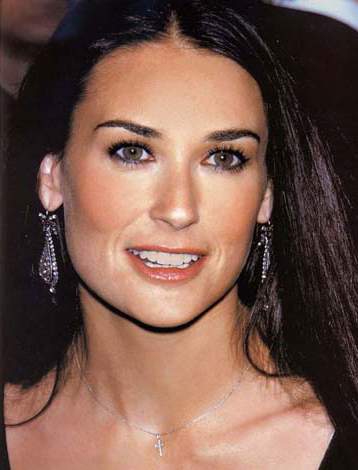
The newspaper headline instantly grabbed my attention: “Demi worries about being unlovable”.

The article, published in early 2012, highlighted an interview actress Demi Moore did just a week after she filed for divorce from actor Ashton Kutcher, star of the TV sitcoms That ‘70s Show and Two and a Half Men.

Moore, best known for movies such as Ghost, A Few Good Men and Charlie’s Angels: Full Throttle, said this to Harper’s Bazaar magazine: “What scares me is I’m going to find out at the end of my life that I’m … not worthy of being loved. That there’s something fundamentally wrong with me…”

It’s a startlingly frank statement for a media star like Moore to make, but it addresses a common human fear. There were many years of my life when I felt exactly the same.

But here’s the thing: since deciding to follow Jesus of Nazareth (who many people believe is God’s Son) in 2002, I’ve learned that it’s not all that important whether I feel unlovable. Because it’s simply not the truth.

The evidence? Consider these words from one of the primary source documents of Jesus’ life: “God loved the world so much that He gave His only Son, so that everyone who believes in Him would not be lost, but have eternal life.” I know ‘the world’ includes me and I’m pretty sure Demi Moore makes the cut, too. (In fact, EVERYONE qualifies, whether we like it or not.)

How about this, written by Paul, a missionary who spent much of his life telling others about Jesus: “Christ died for us while we were still sinners, and by this God showed how much He loves us.” Once again, there are no qualifiers. Everyone can accept this gift, from Demi Moore to the worst person you can imagine.

Finally, this quote from an ancient prophet may be the most amazing of all: “You are precious to Me [God], and I have given you a special place of honour. I love you. That’s why I am willing to trade others, to give up whole nations, to save your life.”

When I read these excerpts, I’m reminded all over again why I decided to follow Jesus. By accepting the gift of His death and resurrection for all the wrong things I’ve done (and all the RIGHT things I HAVEN’T done), I give my love to the One who loved me first.

Jesus’ sacrifice addresses another part of Demi Moore’s statement – feeling like there’s something fundamentally wrong with her. That’s not just a feeling; it’s dead-on true. But not just for Demi – for me, too. And for you.

Indeed, there’s something ‘fundamentally wrong’ with every person on earth: we think we’re God, that we don’t need our creator and we can do whatever we want. So many of our planet’s problems are the result of this selfish thinking.

But rather than simply judge and convict us, God showed how much He loves humanity by reaching out and offering us the gift of Jesus. What’s keeping you from accepting it?

Read Full Post »

The Calgary Sun article was incredibly sad. It detailed how a grieving mother struggled to understand an unprovoked, random attack that killed her son.

After painting a glowing picture of the 37-year-old victim, the reporter quoted the mom as saying “We mere mortals will never understand why, but God only wants the good ones.”

As painful as the article was to read, and as much as my heart went out to the mother, her words caused my brain to pause and ponder.

Who are the “good ones”? Are they funny, shy, gentle computer experts like the victim in this terrible event? What about someone who’s caused horrible pain to others, then turned his or her life around and tried to fix the damage? What if, somewhere down the road, that someone is the man charged in this Calgary murder?

There are some challenging forgiveness issues here. But there’s something else, too.

I happened to come across something written by an ancient guy who followed Jesus of Nazareth, who many people believe is the Son of God. He wrote, “There’s nobody living right, not even one.”

If you believe that, then everyone – even murderers and their random victims – is included in that levelling-the-playing-field statement. So if nobody’s “living right”, does God want any of us? Absolutely!

I’ve heard it said that the story of humanity is all about us wildly imperfect people spurning God and Him refusing to walk away from us, refusing to stop loving us, refusing to rescind the invitation to have a relationship with Him, through Jesus, that lasts for eternity.

Looking for proof? Check out these words from one of the people Jesus personally trained to follow Him: “God does not want anyone to be lost, but He wants all people to change their hearts and lives.”

That means every person on this planet, from the person you admire most to the Calgary killer, is in His sights. Everyone is invited home. What’s keeping you from accepting the invitation?

Read Full Post »

What’s with this “worship” thing?

I used to ask that question when I passed by churches and the sign referred to Sunday “worship services”. Or, if I was at a service and the musicians started playing “worship songs”.

I just couldn’t figure it out. Why would the creator and master of time, space and the universe need us to worship Him? Does that mean He has a universe-sized ego that requires stroking? Really?? If that’s the case, why? I mean, it’s not like he has a lot of competition from other gods, right?

I used to ask my Jesus-following friends about this, but never received a credible answer. And those questions were among the things that kept me from having a relationship with God and Jesus. I associate monumental egos with Adolf Hitler, Osama Bin Laden and torture killers like Paul Bernardo. So if that was part of God’s makeup, then I wanted nothing to do with Him.

I’m not sure when that changed, but as someone with a deep and life-long passion for music, it had to do with hearing songs by amazing spiritual artists such as Russ Taff and Whiteheart, both popular in the 1980s and ’90s. In a literate and talented way, these folks presented a very different picture of God than the one I grew up. And that picture sure didn’t fit with an egomaniac.

So I started to worship. THEN I understood and that took me to a deeper place with Jesus (who many people believe is the son of God).

Here’s the deal: think of your relationship with your spouse/significant other as a micro-version of your relationship with God. When you express love for your spouse/significant other, that opens the door for them to return the favour.

That’s how it is with God. When I stand in church, or at a concert, and tell Jesus how much I love Him, I’m lowering the drawbridge to my heart and soul to receive that love back. And guess what? That’s exactly what happens.

Until we make that love offering – to our spouses/significant others AND to God – we just aren’t in the right emotional and spiritual place to receive it back. But when we do, it’s an incredible bargain because we receive far more than what we ‘put out’. At least that’s my experience.

What do you think…does this put the notion of worshipping God into an understandable and – more importantly – credible place for you?

Read Full Post »

Canadian politician/author/inventor/journalist/broadcaster Charles Templeton was a mostly brilliant jack-of-all-trades. But I’ve left one “occupation” out because it’s poignant and sad and, perhaps, telling the story can help us thoughtfully consider our lives.

Templeton (1915-2001) was also a gifted evangelist who was once on par with Billy Graham–considered by many to be the world’s greatest speaker on following Jesus of Nazareth. In fact, they travelled the continent together as a team.

Templeton hosted a weekly TV show in the United States, regularly preached at massive crusades and, during the 1950s, was a towering leader in the North American church.

But Templeton also had nagging doubts about Jesus – doubts which eventually led him to become an agnostic (someone who simply doesn’t know if there is a God) and walk away from the ministry.

I used to listen to Templeton every morning on Toronto’s CKEY radio. So once I discovered his past, Templeton’s story intrigued me to the point of writing a Calgary Herald review of his 1996 book Farewell To God: My Reasons for Rejecting the Christian Faith.

What that book left out was an incident from when he was struggling with his faith. Templeton had what can only be called a mystical experience, where he “saw” God and Jesus weeping for the sins, wars, and hatreds of humanity. As he wrote in another book, his anecdotal memoir:

“When I became conscious of my surroundings again, I was lying on the wet grass, convulsed by sobs. I had been outside myself and didn’t know for how long. Later, I couldn’t sleep and trembled as though with a fever at the thought that I had caught a glimpse through the veil.”

Templeton tried to repeat the experience, which is bizarre because how would one go about “creating” such an extraordinary event? When he couldn’t, Templeton researched mystical experiences until concluding they were not unusual, and in his words, “of no special significance. Mystical experience has added no insight to our knowledge of God or to Christian doctrine.”

Not unusual? Of no special significance?? People all over this planet would love to have the sort of mystical experience that was bestowed on Templeton, regardless of belief level. Indeed, Mother Teresa spent most of her adult life praying (in vain) to experience God this way. And what “authority” declared mystical experiences are irrelevant unless they add to our knowledge of God?

I find myself profoundly saddened that Templeton found ways to write off one of the most incredible moments any human being can ever pray to experience. The way I see it, God did, indeed, let him glimpse through the veil and see things most of us can never hope to see. God went out of his way for Templeton. And Templeton still walked away from a life of faith.

So what can we take away from this? In his book Your God Is Too Safe, Canadian author Mark Buchanan puts it this way: “Here lies the basic flaw of all doubt: it can never really be satisfied. No evidence is ever, fully, finally enough. Doubt wants always to consume, never to consummate.”

Before I decided to follow Jesus of Nazareth (whom many people believe is the Son of God), Buchanan’s words were a perfect description for me. At some point, I had to reconcile myself with not getting all the answers to my questions. Once I did that, the doors opened to a transformational chapter in my life – a transformation that won’t be finished until this life is done.

Can you set aside your nagging questions and trust in someone bigger than yourself? Or are you staring at the possibility of Charles Templeton’s fate? Post a comment and let me know.

Read Full Post »

Are you as fascinated as I am with the spirituality of celebrities? In recent years, the media told us about pop singer Katy Perry not having a childhood because of her strict religious parents (they wouldn’t even let her buy non-Christian CDs), and about Brad Pitt (who grew up the son of very conservative Christian parents) saying his upbringing was stifling.

Now there’s another celebrity speaking out about faith.  Singer Brian Johnson, the 70-year-old member of AC/DC – I love his wolverine-in-heat singing style – told the website popeater.com that he doesn’t believe in religion.

“I believe all religions are bad,” he said. “I think they’re a waste of time.”

From a Christian perspective (and that was Johnson’s childhood environment), he couldn’t be more right. Religion is about rules and appearances – follow the rules and make sure you appear to have it all together. If you don’t, prepare to be criticized and ostracized.

Jesus of Nazareth, who many people believe is the Son of God, has no use for this kind of thinking. He told the self-righteous religious leaders of His day (those are likely the sort of people Johnson is thinking about) that they were hopeless frauds.

One of the original source documents of His life records Him telling a crowd of people, “Instead of giving you God’s Law as food and drink by which you can banquet on God, they [the self-righteous religious leaders] package it in bundles of rules, loading you down like pack animals. They seem to take pleasure in watching you stagger under these loads.”

In the case of Katy Perry (famous for her outlandish outfits and the hit song ‘I Kissed a Girl’), she told Vanity Fair magazine her parents wouldn’t let her say ‘deviled eggs’ or ‘dirt devil’ and the only book her mother ever read to her was the Bible.

Now this may be a case of parents fearful of losing their child to all the attractions of our superficial, often-misguided culture. But that fear caused them to go to such laughable religious extremes that Perry abandoned her faith.

These were the same kinds of extremes Jesus dealt with. His followers were collecting food during the Sabbath – a holy day of rest for serious Jews – when those obnoxious, rule-obsessed religious leaders found out and accused them of breaking Jewish law. As before, Jesus refused to knuckle under.

The Sabbath was made to serve us; we weren’t made to serve the Sabbath,” He told them.

Notice what keeps happening? Now, as in ancient times, religion keeps getting in the way of people having a life-changing relationship with God – a relationship that ultimately guarantees us a place in Heaven with Jesus.

I’m not saying all rules are always bad; can you imagine the mayhem that would result if we tried playing hockey or soccer without rules? Those guidelines help us understand and enjoy hockey and soccer, just as the guidelines Jesus supported help us understand and enjoy a relationship with God, through Jesus.

If this makes sense, are you willing to give God (as opposed to religion) a try?

Read Full Post »

Remember the horrible grounding of the Costa Concordia cruise ship? Among the rescue stories from the January, 2012 disaster, this one struck me.

I owe my life to husband’s sacrifice, says survivor who was given last life jacket,” stated the newspaper headline on an article about a French woman who lived through the catastrophe.

Nicole Servel, 61, recalled how “He said to me ‘jump, jump’. And as I don’t know how to swim, he gave me his life jacket.” The body of her husband, Francis, was later found in the wreckage, one of more than 30 people who died after the boat ran aground along the Italian coast, then keeled over.

Consider these facts about Mrs. Servel’s sad, amazing story:

  1. She was in serious danger;
  2. She was incapable of escaping that danger;
  3. If someone had not come to her rescue, she would have died, and;
  4. That rescuer gave up his life for her.

Why did this hit me so hard? Because it’s the story of Jesus of Nazareth, who many people believe is the Son of God. Ponder these points:

1. Even though it’s not obvious to most of us, you and I are in danger – in danger of losing our eternal lives because of the wrong things we do and the right things we fail to do. Because we reject the guidance of our creator.

2. You and I are incapable of escaping that danger. Despite my efforts, I’m still selfish, conceited, uncommunicative, and reluctant to truly care for God’s people and His creation.
My struggles are shared by all humanity, no matter how “good” some of us appear to be. Even the late Mother Teresa, a shining beacon of goodness, knew she couldn’t save herself. That’s one reason she turned to God.

3. If someone doesn’t come to our rescue – to make up for the shortcomings you and I can’t fix on our own – then we’re doomed to lose our eternal place with God. That “someone” is Jesus.
Looking for evidence? Consider these words from one of the four original-source accounts of Jesus’ life: “God loved the world so much that He gave His only Son, so that everyone who believes in Him would not be lost, but have eternal life.”

4. Jesus gave up His life for me and for everyone else who wants to be rescued and is willing to follow Him. His death on a cross made up for our wrongs and His resurrection paved the way for us to have eternal life. Here’s more evidence, from one of His earliest followers: “Jesus offered one sacrifice, once and for all, when He offered Himself.”

One man’s sacrifice has let Nicole Servel continue living this life. But the sacrifice of another man can let Nicole and anyone else who believes in and follows Him have life, with God, forever. One of those people can be YOU.

What do you think? Agree or disagree, post a comment and let’s have a conversation.

Read Full Post »

Do you believe in karma like the person who created this internet meme? Most people in our culture probably do, even if they don’t realize it. And that’s no surprise; a majority of us are brought up to understand that what we do (or don’t do) will be paid back.

In fact, I imagine many parents slip into teaching this kind of thing, if only as a desperate measure to keep little Johnny from running wild in the grocery store.

But the first thing I thought when I read that ‘billboard’ was “Yikes!” I don’t want to get what I deserve. And when it comes right down to it, I suspect you don’t, either.

Our culture may tell us we’re all OK people, but think about it:

  • Do you really give as much time/finances to charity as you should? I don’t.
  • Are you really, really committed to telling the truth? I like to think I am, but the truth is different, despite my best efforts.
  • When the name of someone you know comes up in conversation, do you jump in by revealing something negative about them? I’ve caught myself doing just that.
  • Do you fall short on doing all that you really can do for the environment? I plead guilty.
  • When you think carefully about your behaviour, do you find there are times when you’ve taken out your frustrations on others? I have.

I could go on, but I’m sure you’ve gotten the point. None of us are really as “good” as we should be. All of us regularly miss the mark on being the kind of person we could be.

So, do you want to get called on the carpet for all the bad things you’ve done – and all the good things you HAVEN’T done? I don’t. And that’s just one little reason why I decided to become follow Jesus of Nazareth, who many people believe is the Son of God.

Jesus followers believe this statement, found in one of the original source documents about Jesus’ life on Earth: “God loved the world so much that he gave his only Son, so that everyone who believes in him would not be lost, but have eternal life.”

In other words, when you believe that Jesus died to make up for all your screw-ups and when you decide to trust your life to him, there is no more karma. You no longer get what you deserve. You get way, WAY better.

In fact, not only can you get a sense of what one of Jesus’s original followers called a peace that goes beyond your ability to understand it, you also receive assurance that that when this life is over, you’ll spend eternity hanging out with Jesus.

This sounds like a fabulous offer. Do you agree? Post a comment and let’s start a conversation.

Read Full Post »

Robin Williams. Whitney Houston. Kurt Cobain. Cory Monteith. All these entertainers had one thing in common: extraordinary God-given talent.

As a result (at least in part…) of that talent, they achieved everything our culture says should lead to permanent happiness and fulfillment. They were fabulously wealthy. They had throngs of adoring fans. They earned the highest honours possible in their industries. They were hugely admired by their peers.

Our culture says they had it made. So what happened – or, more importantly, what didn’t happen – that ended their lives so early?

  • Williams, the Academy-Award winning actor (for 1997’s Good Will Hunting) and an incredible comedian, died of a suicide-related asphyxiation at age 63.
  • Monteith was one of the stars of Glee, a popular TV show in North America. He grew up with substance abuse problems and that didn’t change when Glee transformed him into an award-winning celebrity. He died in 2013 from an overdose of drugs and alcohol.
  • Cobain, singer, songwriter and guitarist with the groundbreaking, phenomenally popular grunge music band Nirvana, died of a self-inflicted gunshot wound in 1994. He was 27.
  • Houston, 48, who sold more than 170 million albums and collected 415 career awards, was found dead in her hotel room in 2012. She had a history of erratic behaviour and cocaine abuse.

Sadly, we can add more names onto this list of icons who had drug and/or alcohol problems and died early: singers Elvis Presley, Janis Joplin, Amy Winehouse and Jim Morrison, plus guitar god Jimi Hendrix and Oscar-winning actor Philip Seymour Hoffman.

Where was the fulfillment promised by our culture? These people should have been much, much happier than you and me. Their tragic deaths make a clear and consistent case for that promise being an empty lie.

Their wealth didn’t satisfy, their awards apparently brought only temporary happiness, and there was no fulfillment to be had in their fans or peers.

So what (or who) CAN bring real, lasting satisfaction and fulfillment? Could it be…God? Blaise Pascal, the French mathematician, physicist and religious philosopher, certainly thought so. One of his most famous quotes says, “There is a God-shaped vacuum in the heart of every man which cannot be filled by any created thing, but only by God, the Creator, made known through Jesus [of Nazareth, who many people believe is God’s Son].”

Why is this possible? Because a life-changing relationship with God, through His son, doesn’t depend on anything our culture has to offer. Rich or poor, famous or obscure – these things mean nothing to God. In fact, a relationship with God doesn’t depend on anything in our resumes. It depends on Him.

Consider these three words from an ancient follower of Jesus: “God is love”. That fact explains why He sent Jesus to die for all the wrong things we’ve done and the right things we haven’t done.

He loves us and wants to wipe the slate clean of what some people call “sins” so there is nothing blocking the way to a satisfying, fulfilling, and eternal relationship with us. All we have to do is believe this and claim Jesus as our saviour.

Does this make sense? Agree or not, post a comment below and let’s start a conversation.

Read Full Post »

« Newer Posts - Older Posts »