Feeds:
Posts
Comments

Posts Tagged ‘theology’

How did I not see this amazing, hilarious, and thoughtful Seinfeld episode when it was first aired?

For a few seasons, Seinfeld – that brilliant, inventive TV sitcom – was a cultural blockbuster, creating catch phrases and situations that millions across North America embraced and used as their own ‘insider’ language.

The episode that fascinates me concentrates, in part, on the relationship between principal character Elaine Benes and her boyfriend, David Puddy.

Benes (played by Julia Louis-Dreyfus) finds out Puddy (Patrick Warburton) is “religious”. This sets up all sorts of conversations between the two, plus other principal characters Jerry and George Constanza.

Here’s a sample of dialogue:

Elaine: I borrowed Puddy’s car and all the presets on his radio were Christian rock stations.

George: I like Christian rock. It’s very positive. It’s not like those real musicians who think they’re so cool and hip.

Elaine: So, you think that Puddy actually believes in something?

Jerry: It’s a used car; he probably never changed the presets.

Elaine: Yes, he is lazy.

Jerry: Plus, he probably doesn’t even know how to program the buttons.

Elaine: Yes, he is dumb.

Jerry: So you prefer dumb and lazy to religious?

Elaine: Dumb and lazy, I understand.

First off, ye gotta love George’s casual dissing of Christian musicians and his breathtaking ignorance. Did you know, for example, that singer/songwriter/guitarist Bruce Cockburn is a Christian? I’ve never heard a single critic knock him for his artistic ability.

Second, the notion of Elaine preferring a dumb and lazy boyfriend to one who is “religious” is not only funny, it’s a remarkably accurate assessment of our culture. From what I can tell, most people would rather spend hours debating the behaviour of the latest Hollywood bad boy/girl than even think about spirituality and life’s big questions.

There’s no doubt that celebrity antics hold the same sort of fascination we feel when we drive past a car wreck. But in the end, does it make any difference in our lives?

Some more priceless Seinfeld dialogue:

Elaine: So, you’re pretty religious?

Puddy: That’s right.

Elaine: So is it a problem that I’m not really religious?

Puddy: Not for me.

Elaine: Why not?

Puddy: I’m not the one going to hell.

Yikes! If any serious follower of Jesus of Nazareth (who many people believe is God’s Son) has used words like this with you, I apologize here and now. It’s no exaggeration to write that anyone who takes his or her faith seriously is never blasé about the fate of friends, family, and loved ones. I’ve eaten veggie burgers that tasted more real than the faith Puddy displays.

Real Jesus followers sacrifice themselves in the same way they believe Jesus took on our failures and misdeeds when Roman authorities hung him on a cross. An ancient document about Jesus says “First we were loved, now we love. God loved us first.”

If you encounter a person who seems somehow different because he/she knows this amazing truth, then you’ve met the real thing and I hope you walk away thinking about your life and your fate.

Read Full Post »

After publishing my last essay, Twittering on the Divine, on another website, a reader named John responded with a pointed assertion. I responded and off we went, on a fascinating and, I believe, important debate on the nature of evil.

What do you think of the points each of us raised? Post your own thoughts below and let’s have a conversation.

John
True, it doesn’t make sense to blame God when someone uses their freewill to commit murders. But then it would be incorrect to thank God when governments and aid groups use their freewill to help starving people. So then God isn’t helping at all.

Frank
John, anyone who believes God is not good and doesn’t care about us will find your mindset quite valid. I prefer not to have such a hopeless perspective and my viewpoint is backed up by the fact that God gave every single person in this broken world a gift – Jesus.

My attitude toward God is also framed by this passage I found in the Bible: “First we were loved, now we love. He loved us first.” For me, Jesus is proof of that love and I respond in kind.

John
I can see how the gift of Jesus could account for God’s creation of evil, that is to say God created evil in humans, but he also gave us Jesus so we can redeem ourselves. But I fail to see how that can account for the existence of evils not caused by humans, such as natural disasters or diseases. A father who gives his children expensive gifts is not necessary a good father.

Frank
Thank you for continuing this conversation, John. I’m enjoying the exchange of viewpoints. A couple of things:

1. Did God create evil? As with my last comment, anyone who doesn’t believe God is good and doesn’t believe He cares about us might lean towards that position, but I do not. And the reason can be found in my previous comment.

2. Biblical Christianity – which I accept as true – states we cannot use Jesus to redeem ourselves. Jesus’s death and resurrection redeems anyone who believes in Him and follows Him. Jesus does the redeeming (the ‘heavy lifting’); our obligation is to believe and trust. The difference might be subtle to some, but it is significant.

3. While I cannot explain diseases (if I could, I would be God and that responsibility is a little big for my shoulders), but as for disasters, we humans only call them that because we are in the way when they happen. If nobody is killed and no property/infrastructure is destroyed by an earthquake, do we still call it a disaster?

John
Since evil exists, wouldn’t it have had to been created by something? If God exists and created all, then he would have had to create evil, for if he did not then whence came evil?

Frank
I did some research on your question about God creating evil, so I could answer it credibly. The website gotquestions.org asserts that God did not create evil – it is not a ‘thing’, after all – and evil is simply the absence of good, just as cold is the absence of hot and darkness is the absence of light.

Obviously, God allows evil behaviour to exist and even to flourish. Why? Because if He didn’t, then He would be snatching back His gift of free will. It’s that simple.

In the end, if you want to think about evil being a ‘created’ thing, then it is created by us – you and me, John, when we drop the ball, when we miss the mark of what God created us to be and when we ignore opportunities to do good.

John
I think the analogy between light/dark and good/evil is a flawed one. Darkness is certainly the absence of light, that’s easy. Suppose you put yourself in a windowless room without any light sources, then certainly the room is dark. Darkness is then our zero point, our natural state of the universe.

Now put yourself in the same room and ask yourself: are you doing any good? If you say no, then by your analogy you are doing evil, since it is your zero point evil is the natural state of the universe. I fail to see how sitting alone in a dark room can be evil. I would suggest the zero point is simply neutral, doing no good and no evil, with evil below it and good above it. Hence God created good and evil.

You could say that sitting in the room is doing good since you’re doing no evil. But then we would have to consider good as our natural state and your analogy becomes reversed. Now evil is simply the absence of good, and good was never created, but evil was.

Frank
Let’s consider the light/dark analogy from this perspective, John: evil is the absence of God.

Where God is not acknowledged, where His will for humanity is ignored, where His love for every single person who ever lived – stretching from Osama Bin Laden to Mother Teresa and *proven* through His gift of Jesus Christ – is ridiculed, then evil is the inevitable consequence.

Sometimes, that evil comes from what you’ve referred to as the neutral of simply sitting in darkness. Does that sitting in darkness include the neutrality of doing nothing to stop someone from getting hit by a car? After all, you’re not driving the car and you’re not the dope who stepped on the road in front of it, so you haven’t done anything wrong (or right) by simply letting events unfold, correct?

But our exchange of views is getting very esoteric, John. The bottom line that I was making in the blog was we have been given two extraordinary and costly (for the giver) gifts: free will and Jesus Christ.

We’re free to spit on those gifts through our actions (and inactions), through our stubborn rejection of all that Jesus has done for every single person who decides to believe in and follow Him. Where do you stand on those gifts, John?

John
There’s no doubt that evil CAN come from what seems to be a neutral state, but there’s no doubt that there is a neutral state like sitting in the doctor’s office.
As for now changing the question from good-evil to acknowledging God-evil. Acknowledging God is simply respecting what God has given everyone ie. life, freewill. Now you’re sitting alone in the doctor’s waiting room, you’re certainly respecting everything God has given you. So the absence of evil is acknowledging Gods will, so evil is again shown to have been created.

The bottom line that I’m making in this debate is that if you want to believe in God, you must accept that he created evil. The only way to believe that He did not create evil, is to not believe in God. Which is one of the many reasons I chose a life without a god.

Frank
John, I simply can not and do not agree with your premise. As far as I’m concerned – and I’ve thought a lot about this, and read lots of books & blogs about this – free will is God’s invention and evil is humanity’s “invention”.

If I believed God “invented” evil (rather than allowing it – a significant difference), my life would become superficial and hope-less. That’s the kind of life I see lived by so many people who have no faith and unknowingly follow all the marketing and lifestyle mantras our society pushes on us.

I was fortunate in that I came to see and embrace the gift of free will, and the gift of Jesus Christ, without some sort of huge, often negative event forcing me to re-examine my life. Will that be what it takes for you to do that re-examining? I deeply and sincerely hope not.

John
I have argued well enough to show that if you believe in God, you must accept that He created evil. I can accept that evil is humanity’s creation because I’ve rejected the idea of any god.

If you insist of believing in God, then you must believe he created evil. Which really is a contradiction to your beliefs so, of course, your life would be hopeless since you’re living a lie. That’s the kind of life I see lived by so many people who have faith and unknowingly follow all the ignorant ideals and beliefs religion pushes on us.

Frank
Well, John, I guess we’re going to agree to disagree. I believe we’ve debated well; my hope and prayer is anyone reading these comments will connect with the hope-filled, positive viewpoint.

I hope readers will also recognize that with some spiritual things, there are no absolutely definitive answers. We can know many things about God (thanks to the Bible), but in some ways, He has been – and will always be – a mystery, whether we like it or not. Rather than frustrating me, I find this mystery is an important reminder that God is God and I am NOT.

In the meantime, John, I hope you don’t mind if I pray for you.

Read Full Post »

Most people with an X/Twitter account know there are always ‘trending topics’ – subjects that attract thousands or even millions of tweets, often from around the world.

Those trending topics range from silly (Things I’m Scared Of, for example) to stargazing (when I wrote this, Dear Taylor Swift was trending; I’m not kidding) to the latest news items.

But recently, I was astonished to find Thanking God was trending. And not just for a few minutes, but for more than a day.

Just as interesting were the tweets on this subject. Some were amusing, such as thanking God for Justin Bieber. But others used the topic in startling ways.

One man wrote “There is nothing more selfish than the privileged thanking God while so many starve and die terrible deaths as their God does nothing.”

Then there was the person who typed “Thanking God for AIDS, hunger, and SIDS (Sudden Infant Death Syndrome). Some top managerial decisions there, man.”

These tweets address an age-old challenge for anyone who believes in a creator: if this creator is good, as many claim, why is humanity stalked by AIDS, hunger, SIDS, and ‘terrible deaths’ – and why has God apparently done nothing about it?

Before I address this, please know that people who claim they can fully, credibly answer these questions are bigger fools than TV bad-boy Charlie Sheen was in his worst moments. An ancient prophet addresses the mystery of these questions like this: “I [God] don’t think the way you think. The way you work isn’t the way I work.”

That said, is God really doing nothing about starvation? Aren’t governments, churches, aid groups, and others helping in poverty-stricken areas of the world? If you claim that’s not God at all, but just charitable people/institutions, can you prove it? Just as important, are YOU part of God’s work in this broken world?

As for terrible deaths, while I wouldn’t dream of trying to explain most of them, how about those committed by evil people? Does it really make sense to blame God when sick, twisted men in Norway (2011), Las Vegas (2017) and Nova Scotia (2020) use God’s gift of freewill to commit mass murder?

It’s these kinds of horrifying events that truly, truly test that gift.

Many people know there’s another such event: the death of Jesus of Nazareth, who they believe is the Son of God.

Jesus followers know He died to pay for the wrong things we’ve done and the right things we haven’t done. What if God prevented the Roman authorities of the day from carrying out that murder? Even Jesus knew it shouldn’t be stopped. He told His followers that He “didn’t come to be served but rather to serve and to give my life to liberate many people.”

So, is thanking God a waste of time (and X/Twitter space), or does it make sense? Post your thoughts below and let’s have a conversation.

Read Full Post »

Rita Chretien had an ally that helped her survive 49 days in the wilderness of Nevada with nothing but her van (which was hopelessly stuck in mud) and carefully rationed road trip snacks.

It’s an ally that might surprise you, but it made all the difference in the world to Rita: it was her faith in Jesus of Nazareth (who many people believe is God’s Son).

According to a Calgary Sun article, Rita and husband Albert were on a road trip from their Pentiction, B.C. home to Las Vegas in March 2011 when they took a sightseeing detour and became stuck on a remote logging road.

After three days, Albert left to find help (a 35-kilometre trip to the nearest major highway), while Rita read books, took daily walks, and studied her Bible. She rationed her meagre supplies and drank melted snow.

Rita was discovered May 6, 2011 by men riding ATVs. A doctor at a hospital in northern Nevada said she probably had just a few days of life left. That said, her recovery was astonishingly fast and according to the Sun, the doctor, James Westberry of St. Luke’s Hospital, gave at least some of the credit to her faith.

“I must say, it is unusual for us to see someone in this type of situation to not only survive, but to be doing so well,” Westberry added.

News like this doesn’t surprise me; I’ve read about studies that connect faith with resilience and health. Indeed, a 2000 Health Psychology magazine analysis of 42 studies involving more than 125,000 patients found that those with some sort of “religious” involvement live longer.

So, what do you think of this? Does a neutral analysis of so many studies have credibility in your world?

There are lots of places in ancient documents where God is represented as a place of refuge and a solid foundation. During her endless days of worry and creeping fear, Rita must have read and relied on passages like this: “GOD is bedrock under my feet, the castle in which I live, my rescuing knight. Or maybe Rita was encouraged by this: “We who have fled to God for refuge can have great confidence as we hold on to the hope before us.

Now, you may be scoffing at all this, because Rita’s husband was finally found, dead, in September 2012. So in light of that, what credibility or hope do all those quotes have? If you believe there is nothing after this life, that when we die everything comes to a breathtaking halt, then those quotes may, indeed, strike you as meaningless.

But if something inside you says there has to be more than 70-odd years on this planet followed by decaying in a grave, then what I quoted above is worth seriously considering.

Read Full Post »

We live in a world that, in ways you and I can’t even discern, goes out of its way to discourage serious thinking.

That’s why even though I’m a man of faith, I admire many atheists; I know most of them have gone against our culture and actually thought, long and hard, about their beliefs.

That’s also why I was so interested in a July 2012 National Post interview with Justin Trottier. At the time, he was with the Centre for Inquiry, Canada’s most organized atheist group.

Trottier is a crusader against blind religious faith. And I’m 100 per cent with him. Only one example is needed to explain our shared position: blind religious faith was among the major reasons for the Sept. 11, 2001 terrorist attacks.

That said, beyond our obvious and dramatic differences, I want to highlight Trottier’s opposition to teaching religion to children. He told interviewer Charles Lewis that “robbing kids of critical faculties is a bad thing”.

From my vantage point, Trottier’s opinion sounds a lot like a characteristic of blind religious faith – in this case, believing there is no creator and teaching anyone otherwise is simply indoctrinating impressionable young minds.

In reading up on today’s best-known atheists (Richard Dawkins, Daniel Dennett, Sam Harris, the late Christopher Hitchens and Victor Stenger) I notice this militant absolutism is a common denominator.

Teaching faith to children simply gives them the opportunity to make up their own minds about what they do and don’t believe. How can I write this? Because I know that as soon as they are old enough to explore issues and weigh options, these young minds will be assaulted with an unending tsunami of images, events and opinions that are dead-set against faith.

Without any faith knowledge, the “fight” is over before it even begins. And if Trottier seeks to be a thoughtful and fair person, then I hope he will consider this incredible imbalance and change his stance.

What about you – are you a parent who’s unsure if there’s a God? Do you not know where you stand on the idea that not only is there a creator, but that He sent Jesus of Nazareth (who many people believe is His Son) to live, die and be resurrected for you and me?

Then set that aside for the sake of your offspring. Take them to church, let them hear about Jesus and allow them to make up their own minds. It’s a gift they deserve; a gift you won’t regret giving.

Read Full Post »

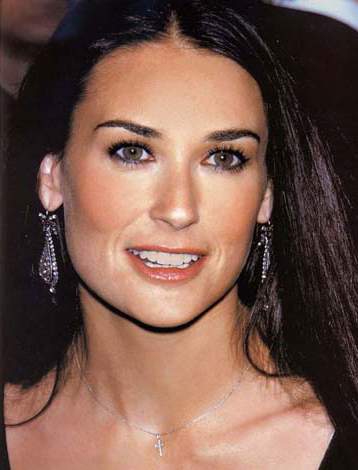
The newspaper headline instantly grabbed my attention: “Demi worries about being unlovable”.

The article, published in early 2012, highlighted an interview actress Demi Moore did just a week after she filed for divorce from actor Ashton Kutcher, star of the TV sitcoms That ‘70s Show and Two and a Half Men.

Moore, best known for movies such as Ghost, A Few Good Men and Charlie’s Angels: Full Throttle, said this to Harper’s Bazaar magazine: “What scares me is I’m going to find out at the end of my life that I’m … not worthy of being loved. That there’s something fundamentally wrong with me…”

It’s a startlingly frank statement for a media star like Moore to make, but it addresses a common human fear. There were many years of my life when I felt exactly the same.

But here’s the thing: since deciding to follow Jesus of Nazareth (who many people believe is God’s Son) in 2002, I’ve learned that it’s not all that important whether I feel unlovable. Because it’s simply not the truth.

The evidence? Consider these words from one of the primary source documents of Jesus’ life: “God loved the world so much that He gave His only Son, so that everyone who believes in Him would not be lost, but have eternal life.” I know ‘the world’ includes me and I’m pretty sure Demi Moore makes the cut, too. (In fact, EVERYONE qualifies, whether we like it or not.)

How about this, written by Paul, a missionary who spent much of his life telling others about Jesus: “Christ died for us while we were still sinners, and by this God showed how much He loves us.” Once again, there are no qualifiers. Everyone can accept this gift, from Demi Moore to the worst person you can imagine.

Finally, this quote from an ancient prophet may be the most amazing of all: “You are precious to Me [God], and I have given you a special place of honour. I love you. That’s why I am willing to trade others, to give up whole nations, to save your life.”

When I read these excerpts, I’m reminded all over again why I decided to follow Jesus. By accepting the gift of His death and resurrection for all the wrong things I’ve done (and all the RIGHT things I HAVEN’T done), I give my love to the One who loved me first.

Jesus’ sacrifice addresses another part of Demi Moore’s statement – feeling like there’s something fundamentally wrong with her. That’s not just a feeling; it’s dead-on true. But not just for Demi – for me, too. And for you.

Indeed, there’s something ‘fundamentally wrong’ with every person on earth: we think we’re God, that we don’t need our creator and we can do whatever we want. So many of our planet’s problems are the result of this selfish thinking.

But rather than simply judge and convict us, God showed how much He loves humanity by reaching out and offering us the gift of Jesus. What’s keeping you from accepting it?

Read Full Post »

The Calgary Sun article was incredibly sad. It detailed how a grieving mother struggled to understand an unprovoked, random attack that killed her son.

After painting a glowing picture of the 37-year-old victim, the reporter quoted the mom as saying “We mere mortals will never understand why, but God only wants the good ones.”

As painful as the article was to read, and as much as my heart went out to the mother, her words caused my brain to pause and ponder.

Who are the “good ones”? Are they funny, shy, gentle computer experts like the victim in this terrible event? What about someone who’s caused horrible pain to others, then turned his or her life around and tried to fix the damage? What if, somewhere down the road, that someone is the man charged in this Calgary murder?

There are some challenging forgiveness issues here. But there’s something else, too.

I happened to come across something written by an ancient guy who followed Jesus of Nazareth, who many people believe is the Son of God. He wrote, “There’s nobody living right, not even one.”

If you believe that, then everyone – even murderers and their random victims – is included in that levelling-the-playing-field statement. So if nobody’s “living right”, does God want any of us? Absolutely!

I’ve heard it said that the story of humanity is all about us wildly imperfect people spurning God and Him refusing to walk away from us, refusing to stop loving us, refusing to rescind the invitation to have a relationship with Him, through Jesus, that lasts for eternity.

Looking for proof? Check out these words from one of the people Jesus personally trained to follow Him: “God does not want anyone to be lost, but He wants all people to change their hearts and lives.”

That means every person on this planet, from the person you admire most to the Calgary killer, is in His sights. Everyone is invited home. What’s keeping you from accepting the invitation?

Read Full Post »

What’s with this “worship” thing?

I used to ask that question when I passed by churches and the sign referred to Sunday “worship services”. Or, if I was at a service and the musicians started playing “worship songs”.

I just couldn’t figure it out. Why would the creator and master of time, space and the universe need us to worship Him? Does that mean He has a universe-sized ego that requires stroking? Really?? If that’s the case, why? I mean, it’s not like he has a lot of competition from other gods, right?

I used to ask my Jesus-following friends about this, but never received a credible answer. And those questions were among the things that kept me from having a relationship with God and Jesus. I associate monumental egos with Adolf Hitler, Osama Bin Laden and torture killers like Paul Bernardo. So if that was part of God’s makeup, then I wanted nothing to do with Him.

I’m not sure when that changed, but as someone with a deep and life-long passion for music, it had to do with hearing songs by amazing spiritual artists such as Russ Taff and Whiteheart, both popular in the 1980s and ’90s. In a literate and talented way, these folks presented a very different picture of God than the one I grew up. And that picture sure didn’t fit with an egomaniac.

So I started to worship. THEN I understood and that took me to a deeper place with Jesus (who many people believe is the son of God).

Here’s the deal: think of your relationship with your spouse/significant other as a micro-version of your relationship with God. When you express love for your spouse/significant other, that opens the door for them to return the favour.

That’s how it is with God. When I stand in church, or at a concert, and tell Jesus how much I love Him, I’m lowering the drawbridge to my heart and soul to receive that love back. And guess what? That’s exactly what happens.

Until we make that love offering – to our spouses/significant others AND to God – we just aren’t in the right emotional and spiritual place to receive it back. But when we do, it’s an incredible bargain because we receive far more than what we ‘put out’. At least that’s my experience.

What do you think…does this put the notion of worshipping God into an understandable and – more importantly – credible place for you?

Read Full Post »

Some days I’m simply struck by the disposable, here-today-gone-tomorrow nature of life in North America.

A cellphone manufacturer has recently been in the news; it’s in trouble because a new version of its phone won’t be ready for another six months. Meanwhile, the company’s latest phone is less than two years old.

Then I look through magazines for photographers and runners (both are passions for me). They are filled with advertisements and articles about the latest cameras and shoes.

I’m amazed at how many cameras one manufacturer can put on the market and how the entire idea is to make you feel ashamed to leave the house with that outdated two-year-old waste of materials.

Running shoes? Manufacturers “update” their product lines every six months. Sometimes, that means little more than changing the colour of the trim. Nevertheless, that’s apparently worth articles and ads to subtly tell you to get with it and swap your hideous current shoes for something that’s sure to be infinitely better.

All this makes me long for something permanent (besides death, taxes and government deficits, that is) and something that doesn’t have a ‘best before’ date.

Is it out there? Yes it is.

People like me, who follow Jesus of Nazareth (who many believe is the Son of God), get a great deal of strength and peace in this excerpt, from an ancient Jesus follower: “Jesus Christ is the same yesterday, today and forever.”

The Jesus that His followers believed in and followed a thousand years ago – because they knew He loved them enough to sacrifice himself for their wrongdoings – is not only still around, He’s still loving you, me and everyone else today.

That Jesus is still knocking at the door to our hearts, asking to come in, be our best friend, strengthen us for the hard times and show us how to be the person He wants us to be.

Looking for evidence? Consider this excerpt, from one of Jesus’ earliest followers: “God wants everyone to be saved and to fully understand the truth”.

He wanted that 2,000 years ago (when this quote was written) and, 2,000 years from now, He’ll still want it.

I don’t know about you, but I find that incredibly comforting. No matter what you’ve done (or not done), no matter how you’ve treated family members and work colleagues (or been mistreated by them), no matter what temptations you’ve given in to.

Jesus’ offer of a new life now – and an eternal life when your body gives out – still stands. No strings attached. All you have to do is hear Him knocking and open the door.

Read Full Post »

If you like Jesus, but don’t care for the Christian church, this news item may have grabbed your attention: bestselling vampire novelist Anne Rice (1941-2021), who returned to her Roman Catholic faith in 1998, renounced Christianity in 2010, but retained her commitment to following Jesus.

Is such a thing possible? Ms Rice (best known for writing Interview With The Vampire and The Vampire Lestat) certainly thought so.

Writing on her Facebook page, Ms Rice declared, “It’s simply impossible for me to ‘belong’ to this quarrelsome, hostile, disputatious, and deservedly infamous group. For ten years, I’ve tried. I’ve failed. I’m an outsider. My conscience will allow nothing else.”

At the same time, she maintained, “My faith in Christ is central to my life. My conversion from a pessimistic atheist lost in a world I didn’t understand, to an optimistic believer in a universe created and sustained by a loving God, is crucial to me.”

The reaction to all this was hugely mixed. Some people are sad, others (unfortunately) declare “good riddance” and some are understanding.

I fell into the latter camp. There’s no doubt about it, Jesus followers and their churches are a motley crew who exhibit all the traits of humanity. That means we can be, and often are, petty, smug, self-righteous, self-centred, intentionally blind to our own screw-ups while judging others’ failures, quarrelsome, pessimistic, and more. You get the picture, right?

However, I’m puzzled as to why Ms. Rice found this so intolerable. I don’t believe any human being on this planet today – Christian, Jew, Buddhist, Muslim, atheist, etc. – is immune to at least some of the same shortcomings. Was she?

The Christian church is made up of gloriously imperfect people, so it’s certainly no more virtuous than many other institutions. The trouble is, there was a time when church leaders held it up as a model of morality. Even though few leaders make that mistake today, the residue of that time continues and, in the eyes of the media and militant atheists, this makes the church a safe and easy target.

There are three points that Ms. Rice, and anyone pondering a life of faith, should consider:

1.  Today’s Christian church makes a hugely positive contribution to the world in everything from providing for the poor and helping single mothers to improving their communities and supplying aid to developing nations.
In all this, today’s churches are guided by Jesus, who tells His followers to care for the needy, love their enemies and treat people the way they themselves would like to be treated. Almost every other organization that’s committed to doing good works tries to follow these guidelines, whether they know it or not.

2.  Serious followers of Jesus realize they are called to be in a church. One of Jesus’s early followers wrote something that almost seems addressed to people like Anne Rice: “Let us not give up meeting together, as some are in the habit of doing, but let us encourage one another.”

3.  Being part of a church, no matter how imperfect it may be, helps serious Jesus followers deepen their faith and resist some of the nasty temptations offered up by our culture, such as pornography, shop-til-you-drop lifestyles, gambling, and dog-eat-dog competitiveness.

It’s not always easy being part of a church. But for most serious Jesus followers, the go-it-alone alternative is worse. I hope Anne Rice realized this before she left this life.

So, have you walked away from attending church? If so, why? And do the three points listed above make any difference in your viewpoint?

Read Full Post »

« Newer Posts - Older Posts »